In an era where digital threats are evolving rapidly, securing your Office 365 environment has never been more crucial. Office 365, a suite known for its robust productivity tools, also demands a proactive approach to security. This blog post delves into essential practices and strategies to fortify your Office 365 setup against various cyber threats. We will explore various aspects of security, from team collaboration to data management, focusing on practical steps to enhance safety and efficiency.
Key Takeaway Table
Aspect
Key Takeaways
Team Collaboration
Utilize Microsoft Teams securely by understanding and managing its limitations.
Data Protection
Implement Azure Files snapshots for robust data management and protection.
SharePoint Security
Optimize SharePoint Online with effective migration, search capabilities, and version control.
Cost & Performance
Balance cost-effectiveness with security in SharePoint Online and leverage PowerShell for management.
Proactive Monitoring
Set up real-time SharePoint alerts for enhanced security monitoring.
Understanding Office 365 Security Landscape
Office 365’s security landscape is both comprehensive and complex, catering to various aspects of digital collaboration and data management. As enterprises increasingly migrate to cloud-based platforms, understanding and implementing the best security practices becomes pivotal. Regular updates to security features and staying abreast of the latest trends are essential steps towards a secure Office 365 environment.
To fully grasp the depth of SharePoint’s role in this landscape, it’s beneficial to explore advanced administrative tips and tricks. These insights can significantly enhance the security and efficiency of your digital workspace.
Enhancing Team Collaboration Securely
Microsoft Teams, a core component of Office 365, facilitates seamless collaboration. However, it’s crucial to acknowledge its limitations and use it securely. By understanding these constraints, organizations can better manage Teams to prevent security vulnerabilities.
This section underscores the need for a well-rounded approach to using Microsoft Teams, ensuring that its features are leveraged in a manner that upholds security standards.
Data Management and Protection
A key element in Office 365 security is robust data management and protection. Utilizing Azure Files snapshots is an effective strategy for data backup and recovery, providing a reliable defense against data loss incidents. This approach not only safeguards your data but also ensures that your organization’s operations can continue uninterrupted in the face of unexpected challenges.
Understanding the Office 365 security landscape, enhancing team collaboration with Microsoft Teams, and implementing effective data management and protection strategies are foundational steps in building a robust security framework. The upcoming sections will delve deeper into SharePoint Online’s role in security, optimizing costs, and the importance of proactive monitoring.
SharePoint Online – Maximizing Security and Efficiency
SharePoint Online, an integral part of the Office 365 suite, plays a pivotal role in collaboration and data management. Ensuring a secure and efficient SharePoint setup begins with a well-planned migration strategy. This includes understanding the platform’s capabilities and configuring it to meet your organization’s specific security needs.
Advanced search capabilities in SharePoint Online allow for more than just finding documents; they enable administrators to maintain oversight and control over the data flow. Additionally, effective version control in SharePoint is essential for document integrity and collaborative workspaces.
Optimizing SharePoint for Cost and Performance
Balancing cost-effectiveness with security is a crucial aspect of managing SharePoint Online. By optimizing SharePoint costs, organizations can ensure they are not only secure but also efficient in resource utilization. Additionally, harnessing the power of PowerShell for SharePoint management opens doors to more streamlined and secure administration.
Proactive Monitoring and Alerts in SharePoint
Proactive monitoring is key to maintaining a secure Office 365 environment. Setting up real-time alerts in SharePoint allows administrators to stay ahead of potential security breaches, ensuring immediate response and mitigation. This section highlights the importance of these alerts and guides on how to effectively implement them for enhanced security monitoring.
As we have seen, SharePoint Online is a cornerstone of Office 365 security. From meticulous migration to cost optimization and proactive monitoring, each aspect plays a vital role in safeguarding your digital environment. In the final part of this post, we will conclude with additional best practices and summarize our key takeaways for maintaining robust security in Office 365.
Final Thoughts on Office 365 Security In this concluding section, we underscore the importance of a comprehensive approach to securing Office 365. The practices and strategies discussed are not just individual elements but part of an interconnected framework that ensures the integrity and safety of your digital workspace.
Comprehensive Security Strategy A comprehensive security strategy for Office 365 involves understanding the interconnectedness of various components like Microsoft Teams, SharePoint Online, and Azure. Each element, while distinct, contributes to the overall security posture of your organization.
Regular Security Assessments ) Regular security assessments and reviews are vital. They ensure that the measures in place are effectively countering current threats and adapting to new challenges. This ongoing vigilance is crucial in a landscape where cyber threats are continuously evolving.
Embracing a Culture of Security Creating a culture of security within your organization is imperative. This involves regular training, awareness programs, and fostering an environment where every employee understands their role in maintaining security.
Leveraging Advanced Security Features Office 365 comes equipped with advanced security features. It’s essential to leverage these tools effectively, such as using the Security & Compliance Center for Office 365, to enhance your organization’s security posture.
Staying Informed and Updated
Lastly, staying informed about the latest security trends and updates in Office 365 is crucial. Regularly visiting reliable technology blogs, like the SmiKar Software Blog, can provide valuable insights and updates to keep your security measures up-to-date.
Conclusion Securing Office 365 is an ongoing process that requires diligence, strategic planning, and a proactive approach. By implementing the best practices discussed, including those detailed in our internal links, organizations can significantly enhance their security posture. Remember, in the realm of cybersecurity, staying one step ahead is key to safeguarding your digital assets.
10 FAQs on Office 365 Security Best Practices
What is the most effective way to improve Office 365 security?
Utilizing Multi-Factor Authentication (MFA) is the most effective and straightforward method to enhance security.
How can I secure admin accounts in Office 365?
Use separate admin accounts for elevated privileges and create an emergency access account for critical situations.
Is training employees on Office 365 security necessary?
Yes, employee training is crucial as human error is a significant factor in security breaches.
How can I protect my organization from ransomware attacks in Office 365?
Enable features like Safe Attachments in Microsoft 365 Defender to protect against ransomware.
What should I do to manage data securely in Office 365?
Implement Azure Files snapshots for data backup and recovery and manage data sharing settings in SharePoint and OneDrive.
How can I optimize SharePoint Online for security and cost?
Balance security features with cost considerations and use PowerShell for efficient management.
What role does SharePoint play in Office 365 security?
SharePoint is critical for collaboration and data management, and its security settings are integral to overall Office 365 security.
Can setting up alerts in SharePoint enhance security?
Yes, setting up real-time alerts in SharePoint is essential for proactive security monitoring.
How can I stay updated on Office 365 security best practices?
Regularly visit technology blogs like SmiKar Software Blog and follow updates from Microsoft.
What is a comprehensive security strategy for Office 365?
It involves integrating various components like Microsoft Teams, SharePoint, and Azure for a robust security posture.
SharePoint Online, a cornerstone of modern enterprise collaboration and content management, offers administrators a range of tools and features to optimize and secure their digital workspace. This article delves into several advanced tips and techniques, offering in-depth insights for SharePoint Online administrators to elevate their site management and user engagement strategies.
Key Takeaways:
Tip
Key Takeaway
Robust Permission Structure
Implement layered permissions aligned with organizational roles for enhanced security.
SharePoint Groups
Use groups for streamlined user management and consistent access control.
Hub Sites
Centralize and connect related sites for unified navigation and shared resources.
Content Types & Metadata
Utilize content types and metadata for efficient data organization and retrieval.
SharePoint Workflows
Automate business processes to improve efficiency and consistency.
Site Policies
Manage site lifecycles effectively through governance policies.
Customizing SharePoint Search
Enhance search functionality for more accurate and user-friendly results.
Monitoring SharePoint Health & Usage
Use analytics for insights into site performance and user engagement.
Managing SharePoint Storage
Implement storage quotas and monitor usage to maintain optimal system performance.
Staying Updated with SharePoint Online
Regularly update and test new features to leverage advancements and maintain security.
SharePoint Online Tips and Tricks
Tip 1: Implementing a Robust Permission Structure
Overview: Permissions in SharePoint Online are the backbone of security and content management. A well-structured permission system ensures sensitive information is adequately protected while making necessary content accessible to the right users.
How-To: Start by creating a comprehensive map of your organizational structure and content hierarchy. Define roles and responsibilities clearly and align them with SharePoint’s permission levels. It’s essential to understand the difference between SharePoint groups, permission levels, and inheritance.
Site Collection Permissions: At the top level, manage who has full control, owner, and visitor access. Be cautious with ‘Full Control’ permissions, as they allow users to make significant changes.
Subsite and Library Permissions: Break inheritance judiciously to give specific access to subsites, libraries, and lists. Use groups to assign permissions to these entities, ensuring a clear and manageable permission structure.
Item-Level Permissions: For highly sensitive documents, use item-level permissions to restrict access. While powerful, be aware this can become complex to manage.
Technical Insight: Use PowerShell scripting to handle complex permission setups or bulk changes. Understand SharePoint’s security trimming feature, which automatically hides content from users who don’t have the appropriate permissions. Regularly audit your permissions setup to ensure it aligns with current organizational needs and compliance requirements.
Challenges and Considerations: Avoid over-complicating the structure. Too many layers can lead to management difficulties and user confusion. Strive for a balance between security and usability.
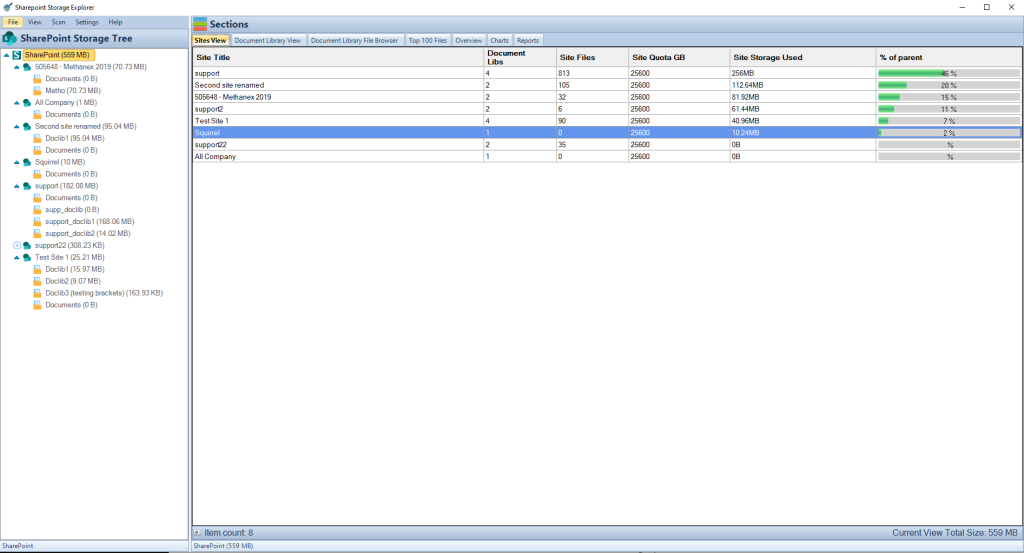
SharePoint Storage Explorer Main Windows
Tip 2: Leveraging SharePoint Groups for Efficient User Management
Overview: SharePoint groups are a fundamental aspect of managing user access. They simplify the assignment of permissions and ensure consistent access control across your SharePoint environment.
How-To: Create groups that reflect your organization’s departments or teams. For instance, a ‘Marketing Team’ group can have access to specific marketing project sites and libraries.
Creating and Managing Groups: Use the SharePoint admin center to create new groups. Assign a set of permissions to each group based on their role.
Adding and Removing Users: Regularly update group memberships to reflect changes in your team. Automate this process by integrating with Azure AD, where possible, to sync group memberships based on organizational roles.
Technical Insight: Utilize group settings to define who can view and edit group membership. Consider creating ‘Audience’ groups for targeted content delivery. Use Microsoft 365 groups for a more integrated experience across various Microsoft applications.
Challenges and Considerations: Regular maintenance of group memberships is crucial to prevent ‘orphaned’ users or groups. Monitor the groups for relevancy and update them as your organization evolves.
Mastering SharePoint Online
Please fill out the form below to get our free Ebook "Mastering SharePoint Online" emailed to you
FREE DOWNLOAD
Send download link to:
Tip 3: Utilizing SharePoint Hub Sites
Overview: Hub sites in SharePoint Online offer a way to connect and organize sites based on project, department, or region, providing a common navigational structure and shared resources.
How-To: Identify the key areas of your organization that could benefit from a connected approach. Convert an existing site to a hub site through the SharePoint admin center or create a new one.
Setting Up a Hub Site: In the SharePoint admin center, select the site you wish to convert into a hub site. Use the ‘Register as hub site’ option and configure its settings, including name and description.
Connecting Sites to the Hub: Choose related sites to associate with this hub. This connection allows for centralized navigation, shared themes, and content roll-up across associated sites.
Technical Insight: Utilize the SharePoint Online Management Shell for bulk operations on hub sites. You can script the connection and disconnection of multiple sites to a hub site. Take advantage of hub site search scope for unified search results across all associated sites.
Challenges and Considerations: Avoid creating too many hub sites, which can lead to a disjointed user experience. Strategically plan hub sites to mirror your organization’s structure and workflow.
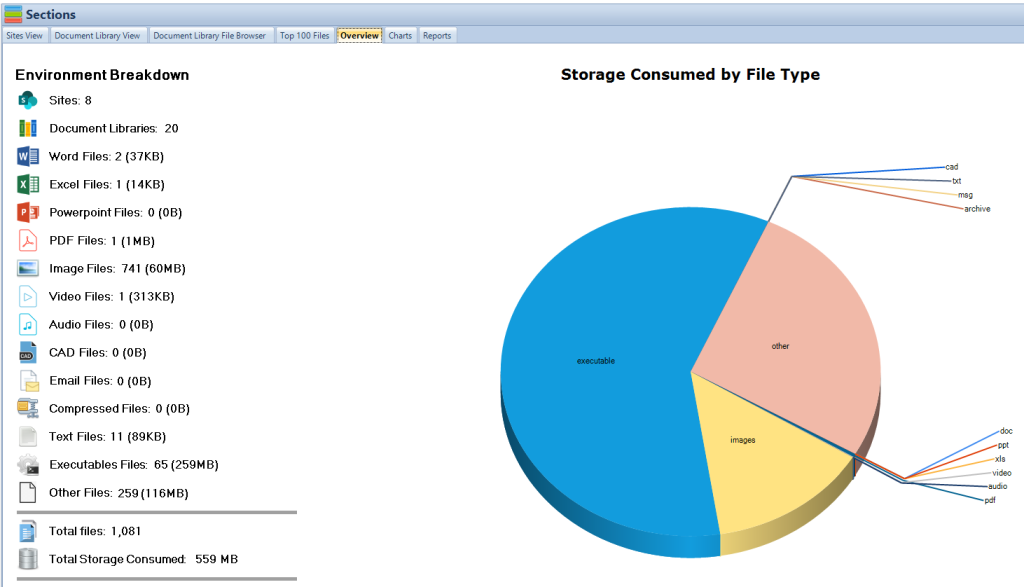
SharePoint Storage Explorer Overview
Tip 4: Advanced Data Management with Content Types and Metadata
Overview: Content types and metadata in SharePoint Online provide a powerful way to organize, manage, and retrieve content efficiently.
How-To: Establish a standardized set of content types and metadata for your organization.
Defining Content Types: Create content types that represent different kinds of documents and items in your organization, such as ‘Project Plans’ or ‘Expense Reports’. Include specific metadata fields in each content type for detailed categorization.
Implementing Metadata: Utilize metadata fields to tag and categorize documents. This approach allows for dynamic views in libraries and more effective search results.
Technical Insight: Leverage the Content Type Hub for organization-wide content type publishing. Use Managed Metadata Service to create a centralized term store for consistent taxonomy across your SharePoint environment.
Challenges and Considerations: Regularly review and update your content types and metadata to ensure they stay relevant and useful. Train users on the importance and usage of metadata for improved compliance and retrieval efficiency.
SharePoint Storage Explorer
Gain insights in to your SharePoint Online Storage Consumption
Download our completely FREE TOOL
FREE DOWNLOAD
Send download link to:
Tip 5: Automating Processes with SharePoint Workflows
Overview: SharePoint workflows are essential for automating repetitive tasks, improving efficiency, and ensuring process consistency across the organization.
How-To: Identify common processes in your organization that can benefit from automation. Use SharePoint Designer or Power Automate to create workflows.
Creating Workflows: In SharePoint Designer, choose the type of workflow (List, Reusable, or Site) and define the conditions and actions. For more complex workflows, consider using Power Automate, which offers integration with a wider range of services and advanced logic capabilities.
Deploying and Managing Workflows: Test workflows in a controlled environment before deployment. Monitor their performance and make adjustments as necessary.
Technical Insight: Utilize workflow history logs to troubleshoot issues. In Power Automate, leverage advanced expressions and custom connectors for sophisticated automation scenarios.
Challenges and Considerations: Keep workflows as simple as possible to ensure they are maintainable and scalable. Regularly update and review workflows to align with changing business processes.
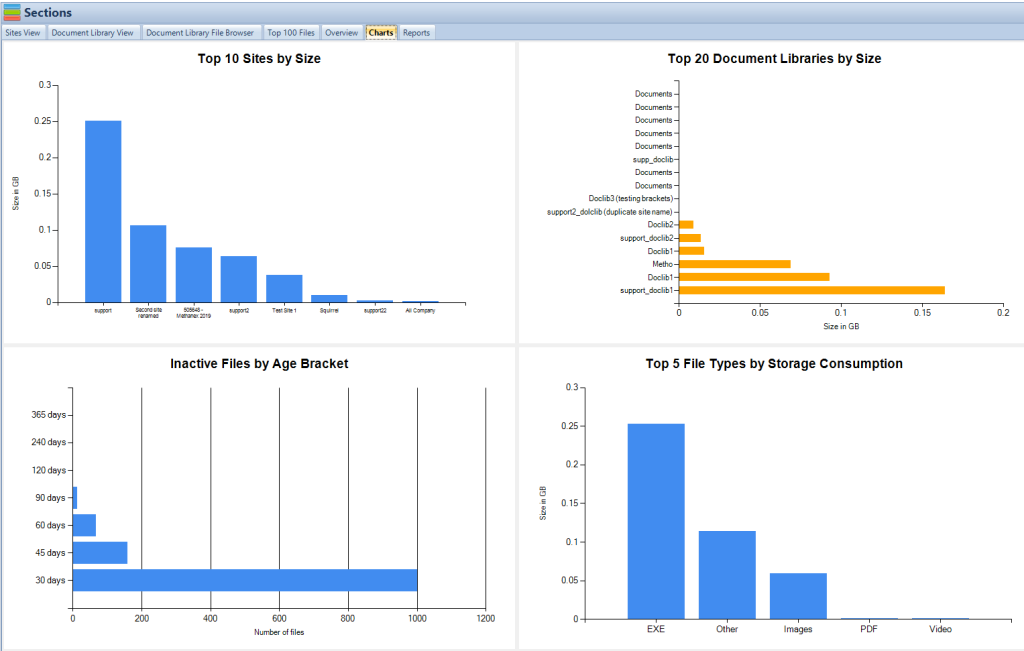
SharePoint Storage Explorer Charts
Tip 6: Implementing SharePoint Site Policies
Overview: Site policies in SharePoint Online help manage the lifecycle of sites, ensuring they remain relevant and compliant.
How-To: Develop site policies that reflect your organization’s data governance and compliance requirements.
Creating Site Policies: In the SharePoint admin center, define site closure and deletion policies. Set up rules for archiving sites and content, specifying retention periods and actions to be taken when a site becomes inactive.
Applying Site Policies: Associate these policies with sites during their creation or through site settings. Ensure that site owners are aware of the policies and their implications.
Technical Insight: Use PowerShell scripts to apply site policies across multiple sites efficiently. Monitor compliance with these policies through SharePoint’s reporting tools.
Challenges and Considerations: Balancing between too rigid and too lax policies is crucial. Regularly review and update site policies to adapt to organizational changes or regulatory requirements.
Tip 7: Customizing SharePoint Search for Optimal Results
Overview: Tailoring the SharePoint Online search experience is crucial for helping users find relevant information quickly and efficiently.
How-To: Enhance your SharePoint search functionality by customizing search schemas and managed properties.
Configuring Search Schemas: Modify the search schema to include custom managed properties that align with your organization’s content. This allows for more precise search results based on specific content types or metadata.
Improving Search Experience: Implement search refiners and customize search result pages to provide a more intuitive and user-friendly search experience. Utilize query rules to promote or demote search results based on certain conditions.
Technical Insight: Leverage SharePoint PnP PowerShell to automate search configuration across your environment. Consider integrating Microsoft Search for a more cohesive search experience across Microsoft 365.
Challenges and Considerations: Balancing between over-customization and under-utilization of search features. Regularly gather user feedback to refine the search experience.
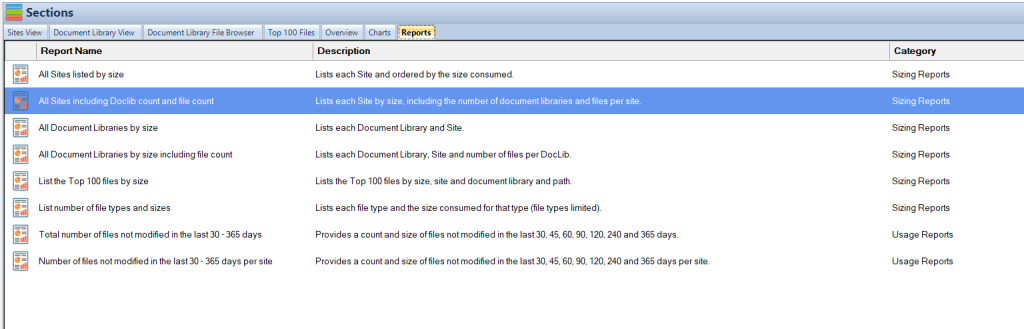
SharePoint Storage Explorer Reports
Tip 8: Monitoring SharePoint Online Health and Usage
Overview: Regular monitoring of SharePoint Online’s health and usage is key to maintaining a high-performing and efficient environment.
How-To: Utilize SharePoint’s built-in analytics tools to gain insights into site usage, user activity, and system health.
Using SharePoint Analytics: Access usage reports in the SharePoint admin center to track how users are interacting with sites. Monitor trends in page views, search queries, and document downloads.
System Health Monitoring: Keep an eye on service health dashboards and set up alerts for any issues or outages in SharePoint Online.
Technical Insight: Advanced administrators can use Microsoft Graph API to create custom reports or integrate with third-party monitoring tools for more detailed analytics.
Challenges and Considerations: Data interpretation and action. Use analytics insights to make informed decisions about training, content management, and system optimizations.
Tip 9: Managing SharePoint Online Storage
Overview: Effective management of storage in SharePoint Online is essential to ensure optimal performance and avoid unnecessary costs.
How-To: Regularly review and manage storage allocation across your SharePoint environment.
Monitoring Storage Usage: Use the SharePoint admin center to monitor storage usage across site collections. Keep an eye on large sites and libraries that may consume disproportionate amounts of storage.
Implementing Storage Quotas: Set storage limits for site collections to prevent unchecked growth. Educate site owners about managing their storage usage effectively.
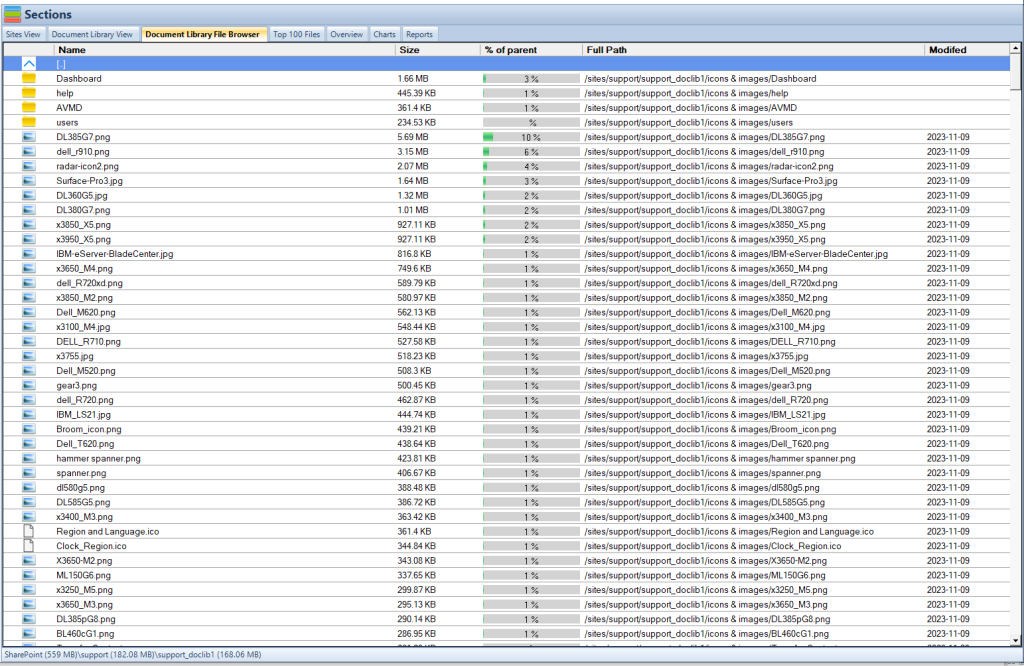
Use SharePoint Storage Explorer: To see how much SharePoint Online Storage you are using, per SharePoint Site or Document Library. Dont forget this tool is FREE.
Technical Insight: Utilize PowerShell scripts to automate storage reports and enforce quotas across multiple site collections. Consider leveraging cloud storage solutions for large or infrequently accessed files.
Challenges and Considerations: Balancing storage needs with cost. Regularly review storage policies to ensure they align with current organizational needs and budget constraints.
SharePoint Storage Explorer File Browser
Tip 10: Staying Up-to-Date with SharePoint Online Updates
Overview: Keeping abreast of the latest updates in SharePoint Online is crucial for leveraging new features and maintaining security.
How-To: Regularly check Microsoft’s release notes and updates for SharePoint Online.
Following Release Cycles: Familiarize yourself with Microsoft’s release cycle for SharePoint Online, which includes targeted release (for early access) and standard release.
Testing New Features: Create a test environment to evaluate new features and updates before rolling them out organization-wide. This helps in identifying any potential issues or training needs.
Technical Insight: Participate in SharePoint community forums and follow SharePoint-focused blogs for insights and best practices. Use the Microsoft 365 admin center to manage update settings and preferences.
Challenges and Considerations: Balancing the adoption of new features with stability and user training. Ensure that updates align with your organization’s IT strategy and user readiness.
Tip 11: Leverage Squirrel for Optimized Document Archiving and Cost Reduction
Streamline Your SharePoint Storage with Squirrel: Managing the sheer volume of documents in SharePoint Online can be challenging and costly. Squirrel offers a robust solution by automating the archiving of older, less frequently accessed documents to Azure Blob Storage, thus optimizing your SharePoint storage. This helps maintain a leaner, more efficient SharePoint environment.
How to Implement Squirrel:
Identify Eligible Documents: Start by determining which documents are accessed infrequently. Squirrel can be configured to automatically move these documents based on predefined criteria such as age or last accessed date.
Set Archiving Rules: Define your archiving rules within Squirrel to match your organizational needs. You can customize rules based on document type, project, or department, ensuring that only relevant documents remain active in your primary SharePoint sites.
Monitor and Adjust: Use the Squirrel dashboard to monitor the archiving process and the impact on your SharePoint performance. Make adjustments to archiving rules as necessary to continually optimize the balance between accessibility and cost efficiency.
Benefits of Using Squirrel:
Reduced Costs: By archiving documents to Azure Blob Storage, you can significantly reduce the costs associated with SharePoint storage, particularly if you are nearing your storage limit and facing the prospect of purchasing additional capacity.
Enhanced Performance: With fewer documents cluttering your SharePoint environment, you’ll experience faster search results and quicker load times, enhancing user satisfaction.
Integrating Squirrel into your SharePoint strategy not only improves operational efficiency but also cuts costs and enhances document management across your organization. As part of your SharePoint maintenance routine, consider how Squirrel can make your document storage more dynamic and cost-effective.
FAQs
How can I ensure optimal security with SharePoint Online permissions?
Implement layered permissions aligned with organizational roles, regularly review and update permissions, and utilize item-level permissions for sensitive documents.
What are the best practices for managing user roles with SharePoint groups?
Create groups reflecting organizational departments or teams, assign consistent permissions to these groups, and integrate with Microsoft 365 groups for enhanced functionality.
How do Hub Sites enhance site organization in SharePoint Online?
Hub Sites centralize and connect related sites, providing unified navigation, shared resources, and consistent branding across associated sites.
What are the advantages of using content types and metadata in SharePoint?
They enable efficient data organization and retrieval, allowing for dynamic views in libraries and more effective search results through standardized document categorization.
How can SharePoint workflows be used to automate business processes?
Use SharePoint Designer or Power Automate to create workflows that automate tasks like document approvals, data collection, and routine administrative processes.
What should be considered when implementing site policies in SharePoint Online?
Develop policies that reflect data governance and compliance requirements, set up rules for archiving, and apply policies to manage site lifecycles effectively.
How can I customize SharePoint search for better user experience?
Modify the search schema to include custom managed properties, implement search refiners, and customize search result pages for precise and user-friendly search experiences.
What are effective ways to monitor SharePoint Online health and usage?
Use SharePoint’s built-in analytics tools to track site usage and user activity, and monitor system health through service health dashboards and alerts.
How do I manage SharePoint Online storage efficiently?
Monitor storage usage regularly, set storage quotas for site collections, and consider integrating cloud storage solutions for large files.
Why is it important to stay updated with SharePoint Online, and how can I do it?
Staying updated ensures you leverage new features and maintain security. Regularly check Microsoft’s release notes, test new features in a controlled environment, and follow SharePoint community forums for updates.
Optimizing Data Management with Azure Files Snapshots
Key Takeaway Table
Azure Files Snapshot Essentials: Capture the state of SMB file shares at specific times.
Benefits: Protection against accidental changes and application errors.
Efficiency: Incremental snapshots reduce storage space and costs.
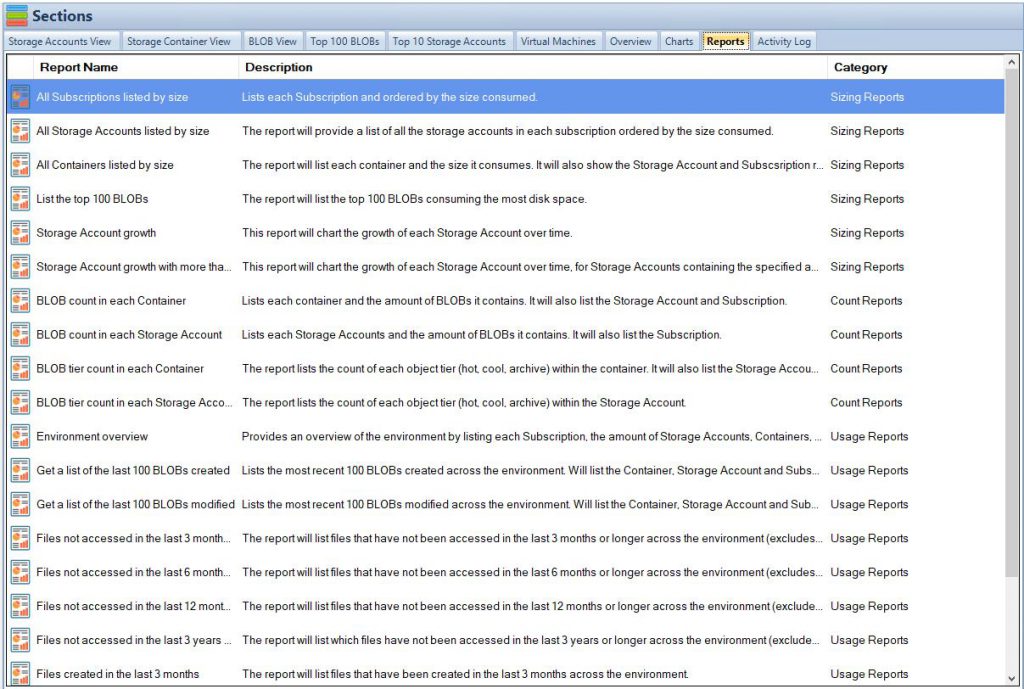
Cloud Storage Manager Reports Tab
Understanding Azure Files Snapshots
Introduction Azure Files snapshots are a crucial component in the landscape of cloud computing, offering robust solutions for data protection and management. These snapshots capture the exact state of SMB file shares at distinct moments, providing a critical safety net against data loss and corruption. Understanding their functionality and proper utilization is essential for any organization leveraging Azure cloud services for file storage and management.
What are Azure Files Snapshots? Azure Files snapshots are point-in-time, read-only versions of file shares. When a snapshot is taken, it records the current state of the file share, preserving its data exactly as it is at that moment. This feature is invaluable for recovering from accidental deletions or overwrites and for maintaining data integrity during software updates or other changes.
External Links for In-Depth Understanding:
Azure Files Overview: This link provides a comprehensive overview of Azure Files snapshots, detailing their basic functionality and application scenarios.
Snapshot Capabilities and Retrieval Options: Here, you can explore the various capabilities of Azure Files snapshots, including how they can be retrieved and utilized in different scenarios.
Managing Snapshots: This resource offers guidance on managing snapshots, covering best practices for creation, storage, and retrieval.
List of Benefits and Uses:
Data Backup and Recovery: Regular snapshots can serve as a backup, enabling quick recovery to a known good state in case of accidental data modifications or deletions.
Disaster Recovery: In the event of a system failure or other catastrophic event, snapshots provide a reliable method for restoring data.
Compliance and Auditing: Maintaining snapshots can be a part of compliance strategies, ensuring that historical data is available for audits or investigations.
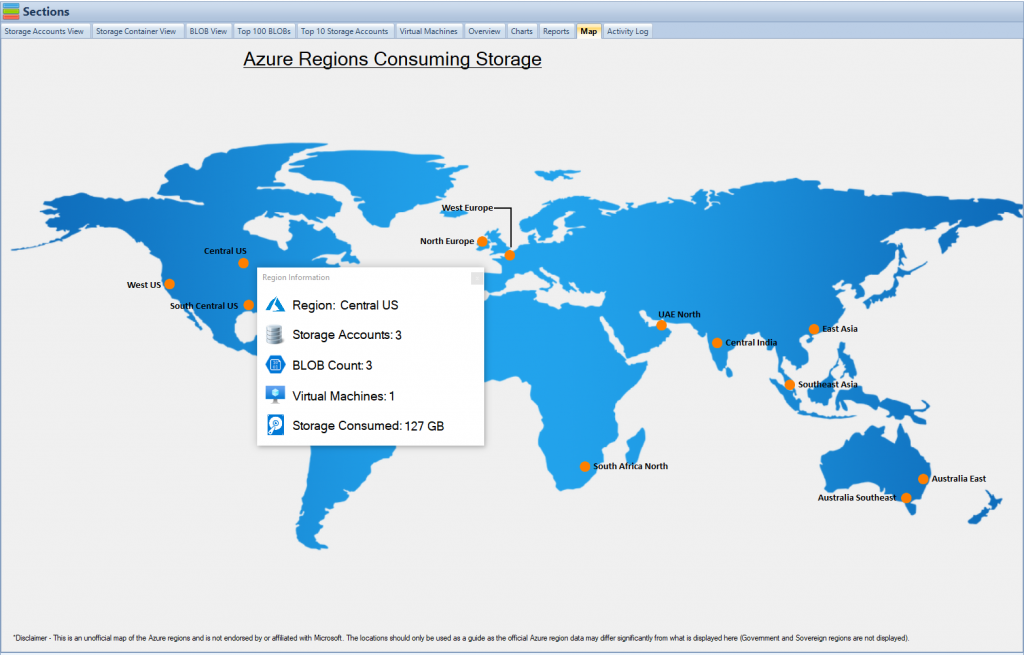
Cloud Storage Manager Map View
Advanced Snapshot Features and Best Practices
Enhancing Data Protection with Advanced Features Azure Files snapshots aren’t just a basic backup tool; they’re an advanced data protection solution. Their incremental nature is a game-changer, ensuring that only data changed since the last snapshot is stored. This approach not only saves storage space but also reduces the time needed to create each snapshot. It’s a smart way to handle data backups, especially in environments where data changes are frequent but usually minor.
Maximizing Efficiency with Snapshots Efficiency is key when managing cloud storage, and Azure Files snapshots excel in this area. By saving only the data that has changed since the last snapshot, storage costs are significantly reduced. This efficiency makes snapshots an ideal solution for regular data backups, even in large-scale environments.
Links for Advanced Understanding:
Snapshot Space Usage: Learn how Azure Files snapshots optimize space usage and storage costs.
Snapshot Limits and Retention Policies: Understand the limits and retention policies that govern the use of snapshots, ensuring that your backup strategy aligns with Azure’s standards.
Copying Data from Snapshots: Discover how to copy data from snapshots, a crucial step in data recovery and analysis.
Ordered List of Steps for Effective Snapshot Management:
Creating Snapshots: Establish a routine schedule for snapshot creation. Regular snapshots ensure that your data is consistently backed up, providing a series of recovery points.
Managing Snapshots: Regularly review your snapshots. This includes checking their integrity and ensuring they align with your data retention policies.
Restoration from Snapshots: Know how to restore data from a snapshot. Whether it’s a single file or an entire file share, understanding the restoration process is crucial for quick and effective data recovery.
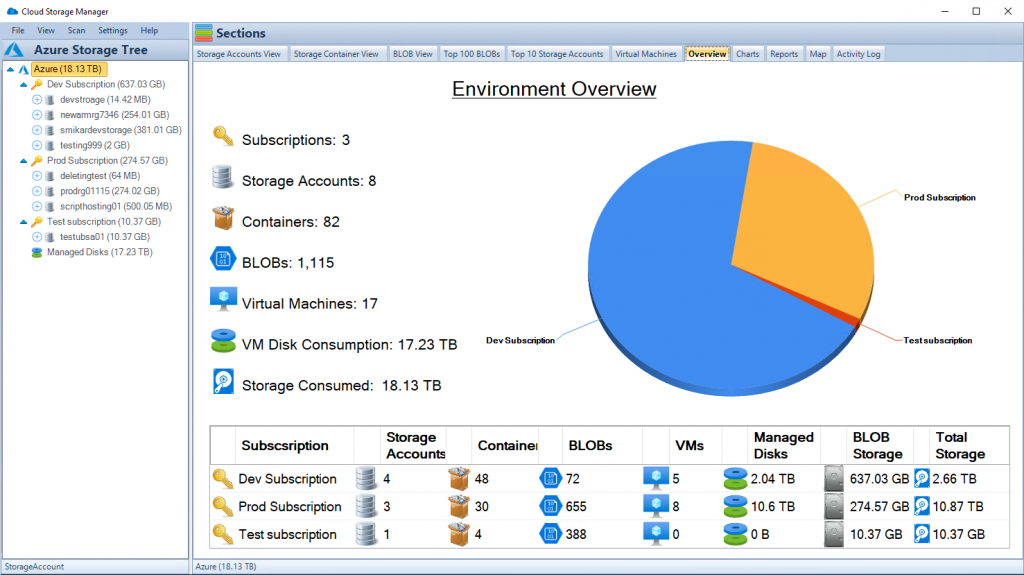
Cloud Storage Manager Main Window
Conclusion: Elevating Snapshot Management with Cloud Storage Manager
Streamlining Management with Tools While Azure Files snapshots are powerful on their own, pairing them with the right management tools can elevate their efficiency and effectiveness. This is where Cloud Storage Manager comes into play, offering a suite of features designed to streamline the management of Azure Files snapshots.
Understanding Cloud Storage Manager’s Role Cloud Storage Manager is more than just a tool; it’s a solution that offers deep insights into your Azure storage usage. It helps in identifying where your storage is being consumed and provides options to optimize it. This not only aids in better snapshot management but also contributes to overall cost reduction and improved operational efficiency.
Cloud Storage Manager:
Cloud Storage Manager: Delve into how Cloud Storage Manager can enhance your Azure Files snapshot experience, offering features and capabilities that simplify and improve snapshot management.
List of Cloud Storage Manager Benefits:
Enhanced Visibility: Gain a clear view of your storage usage and snapshot management, helping you make informed decisions.
Cost Management: Identify potential savings by optimizing storage usage and snapshot schedules.
Operational Efficiency: Streamline snapshot management processes, saving time and resources, and reducing the chances of human error.
Frequently Asked Questions About Azure Files Snapshots
What are Azure Files snapshots?
Azure Files snapshots are point-in-time, read-only copies of Azure file shares that capture their state at a specific moment, useful for backup and recovery purposes.
How are Azure Files snapshots different from traditional backups?
Azure Files snapshots are incremental, storing only the data that has changed since the last snapshot, making them more storage-efficient compared to traditional backups.
Can Azure Files snapshots be automated?
Yes, Azure Files snapshots can be automated using various tools, including Azure Backup and Cloud Storage Manager, to schedule and manage snapshots effectively.
How long can Azure Files snapshots be retained?
Azure Files allows snapshot retention for up to 10 years, but it’s essential to manage them according to your storage capacity and data retention policies.
Are there any size limitations for Azure Files snapshots?
Snapshots don’t count towards the maximum share size limit, but total storage account limits still apply. Azure Files supports up to 200 snapshots per share.
Can I restore a single file from an Azure Files snapshot?
Yes, Azure Files snapshots support individual file level retrieval, allowing you to restore specific files without restoring the entire file share.
Is it possible to copy Azure Files snapshots to another storage account?
While you cannot copy an entire snapshot to another account, you can copy individual files from a snapshot to any location using tools like AzCopy.
How does Azure Files handle snapshot deletion?
Azure Files snapshots persist until explicitly deleted. When a snapshot is deleted, only the data unique to that snapshot is removed.
What is the role of Cloud Storage Manager in managing Azure Files snapshots?
Cloud Storage Manager provides a comprehensive view of Azure storage usage, helps in optimizing snapshot management, and assists in reducing storage costs.
Are Azure Files snapshots suitable for disaster recovery?
Yes, Azure Files snapshots are an effective tool for disaster recovery as they allow you to revert to a previous state of your data, ensuring continuity.
When you enter a query in SharePoint Online‘s search box, you are tapping into a complex system designed to interpret your needs and retrieve the most relevant content. It’s a system built not only to understand what you’re looking for but also to respect the security and organization of your company’s data. By mastering SharePoint Online’s advanced search capabilities, you unlock the potential to transform vast data stores into actionable insights swiftly.
Key Takeaways
Aspect
Detail
Search Architecture Understanding
Foundation for configuring and optimizing search capabilities.
Managed Properties Configuration
Essential for refining search results and improving accuracy.
Customization of Search Results
Enhances user experience and efficiency in finding information.
Search Center Implementation
Centralizes search experience and allows for further refinement.
Query Rules Application
Tailors search results to user behavior and preferences.
Search Health Monitoring
Ensures long-term success and relevance of search functionality.
User Training on Search Features
Empowers users to leverage advanced search capabilities.
The search architecture in SharePoint Online is comprised of several components that work together to index content and respond to search queries.
Step 1: Explore the Search Service Application (SSA)
The Search Service Application (SSA) is the overarching service that encompasses all the search features and configurations in SharePoint Online. Here’s how to approach it:
Access the SSA: Find this in the SharePoint admin center, where you can manage various settings.
Review the Topology: The topology refers to the arrangement of search components within the SSA. It’s essential to have an understanding of this for scaling search capabilities as your organization grows.
Configure Search Components: Within the SSA, you can configure crawl, content processing, analytics processing, and more.
Step 2: Get Familiar with the Crawl Component
The Crawl Component is essential for making content searchable. It ‘crawls’ through your content, indexing information so that it can be retrieved through search queries.
Define Content Sources: Identify where your content lives. This could be site collections, web applications, or file shares.
Manage Crawl Schedules: Set up schedules to determine how often your content sources are crawled. This ensures your search results are up-to-date.
Monitor Crawl Logs: Review these logs to troubleshoot any issues with the crawl process, such as permissions errors or unindexed content.
Mastering SharePoint Online
Please fill out the form below to get our free Ebook "Mastering SharePoint Online" emailed to you
FREE DOWNLOAD
Send download link to:
Step 3: Understand the Content Processing Component
After content is crawled, it goes through the Content Processing Component, where it is parsed and processed.
Document Parsing: This breaks down the content into searchable elements.
Property Mapping: Managed properties are assigned to content so that users can search based on document properties like author, date, or custom metadata.
Content Enrichment: Apply custom processing to enrich content, such as entity extraction or content transformation, improving the search experience.
Step 4: Configure Search Schema and Managed Properties
The Search Schema is where you define what information gets indexed and how it is stored in the search index. Managed properties are key to this process:
Access the Search Schema: Through the SharePoint Online admin center, navigate to the search schema settings.
Create or Modify Managed Properties: These properties dictate how content is indexed. For example, if you frequently search by project number, you can ensure there’s a managed property for that.
Map Crawled Properties to Managed Properties: Connect the dots between the raw data from your crawled content to the managed properties, which users can search against.
SharePoint Storage Explorer Main Windows
Step 5: Set Up Search Result Types and Display Templates
Search result types and display templates determine how search results are presented to users:
Identify Common Result Types: Determine what kind of content you search for most often—documents, list items, people—and set up result types for these.
Customize Display Templates: Tailor how each result type looks and what information is displayed, improving the user’s ability to find what they need quickly.
Step 6: Implement Search Center
The Search Center is your user-facing search interface:
Create a Search Center Site: This dedicated site will be where users go to perform searches.
Customize the Search Experience: Adjust the look and feel, add refiners, and configure search pages to match how your organization searches for information.
SharePoint Storage Explorer
Gain insights in to your SharePoint Online Storage Consumption
Download our completely FREE TOOL
FREE DOWNLOAD
Send download link to:
Step 7: Refine Search with Query Rules
Query rules help you manage how search queries are processed and can be a powerful tool for tailoring search results:
Create Query Rules: Based on user queries, create rules that promote or demote results, or even change the query entirely.
Test and Refine Rules: Continually test the impact of your query rules and refine them based on user feedback and search analytics.
SharePoint Storage Explorer Overview
Step 8: Monitor and Maintain Search Health
Regular monitoring and maintenance are crucial for the long-term success of your search setup:
Review Search Analytics: Keep an eye on what users are searching for and how they are interacting with search results.
Perform Regular Maintenance: Check for crawl errors, ensure content sources are up-to-date, and refine your search schema as necessary.
Step 9: Train Users on Advanced Search Features
User training can dramatically improve the search experience:
Develop Training Material: Create guides and cheat sheets for using advanced search features like boolean operators or property searches.
Conduct Training Sessions: Hold workshops to demonstrate effective search techniques and answer user questions.
By following these steps, you can optimize your SharePoint Online environment for both basic and advanced searches, ensuring users can find the information they need quickly and efficiently.
Conclusion
Embracing the advanced search capabilities of SharePoint Online is crucial for any organization looking to leverage the platform’s full potential. By understanding the intricacies of search architecture, customizing search components, and engaging users through training, businesses can ensure that their employees have the tools they need to find information swiftly and accurately. This guide has outlined the steps to enhance your SharePoint Online search experience, from the initial setup to ongoing maintenance. With these strategies in place, your organization can transform its data into a well-oiled retrieval system that supports productivity and innovation.
FAQs
What is the importance of understanding SharePoint Online’s search architecture? Understanding the search architecture is essential for effectively customizing and managing search functions.
How can managed properties improve my search results? Managed properties allow you to refine search results based on specific content attributes, making searches more accurate.
Can I customize how search results are displayed in SharePoint Online? Yes, by using result types and display templates, you can tailor how search results are presented.
What is a Search Center in SharePoint Online? A Search Center is a dedicated site for performing searches, offering a centralized and customizable search experience.
Why are query rules important in SharePoint Online? Query rules can promote or demote search results, impacting the relevancy of the content that users see.
How often should I monitor SharePoint Online search health? Regular monitoring is recommended to maintain optimal search functionality and address any issues promptly.
What are some common issues with SharePoint Online search? Common issues include crawl errors, outdated content sources, and misconfigured search schemas.
Can I restrict search results based on user permissions? Yes, SharePoint Online’s security trimming ensures users only see search results they have permission to access.
How does SharePoint Online’s search integrate with other Microsoft 365 apps? SharePoint search can be enhanced with insights and content from other Microsoft 365 apps via Microsoft Graph.
Is user training necessary for SharePoint Online search? Training users on advanced search features can significantly improve their search efficiency and effectiveness.
In the labyrinthine corridors of modern enterprise software, SharePoint Online stands as a beacon of collaboration and efficiency. It’s not just a tool; it’s a multifaceted platform that has been meticulously refined to meet the multifarious demands of today’s businesses. Whether you’re a seasoned SharePoint veteran or a newcomer eager to tap into its potential, the advanced features of SharePoint Online promise a treasure trove of possibilities that can transform the way you work.
SharePoint Storage Explorer Charts
Introduction: The SharePoint Online Panorama
Imagine a world where your digital workspace isn’t just a repository of files but a dynamic ecosystem brimming with intelligence, automation, and deep integration. That’s the realm SharePoint Online offers. It’s a world where data dances gracefully to the tune of your command, where collaboration doesn’t just mean sharing documents, but co-authoring the future in real-time.
Key Takeaways:
Robust Security: Unleash the power of Azure AD and advanced threat protection for ironclad security.
Seamless Office 365 Integration: Discover the seamless tapestry woven with Office 365, enhancing productivity and collaboration.
Document Management Mastery: Control the historical narrative of your documents with superior versioning.
Cost Management: Navigate the financial aspects of SharePoint Online without sacrificing performance.
Custom Development: Extend the realm of the possible with the SharePoint Framework (SPFx).
With these pivotal themes setting the stage, let’s embark on a journey to unpack the sophisticated arsenal of features that SharePoint Online brings to your digital doorstep.
SharePoint Storage Explorer
Gain insights in to your SharePoint Online Storage Consumption
Download our completely FREE TOOL
FREE DOWNLOAD
Send download link to:
Fortifying the Fort – Enhanced Security Measures
In this digital age, the security of your data is tantamount to the security of your kingdom. SharePoint Online doesn’t take this lightly. With features that stand guard like sentinels, it ensures that your data is safe from the marauding bands of cyber threats.
The Azure AD Alliance An alliance with Azure AD imbues SharePoint Online with superpowers. It’s like having an elite guard at your gate, with multi-factor authentication and conditional access policies that work tirelessly to ensure that only the right eyes gaze upon your digital treasures.
SharePoint Storage Explorer Main Windows
The Office 365 Confluence
Imagine a symphony where each musician is in perfect harmony with the others, and you’ll begin to understand the integration of SharePoint Online with Office 365. It’s a concert of applications where real-time collaboration isn’t just an idea; it’s the reality—a place where documents are living entities, and analytics tell stories that drive business forward.
The SharePoint Evolution To truly appreciate this feature, one must delve into the history of SharePoint—its past, present, and the prospects of its future within the Office 365 suite. This understanding isn’t just academic; it’s practical, guiding users through the labyrinth of the platform’s capabilities.
The Art of Document Management
With SharePoint Online, document management becomes an art. Version control is the paintbrush, and your documents are the canvas. Every stroke, every edit, is a part of a grander design, meticulously captured and preserved in the annals of your digital repository.
Tracking Changes with Precision This isn’t just about tracking who changed what. It’s about understanding the story behind each change, the intent, the purpose. It’s about reverting with a click when the narrative takes an unwanted turn, ensuring that the integrity of your documents is unblemished.
The Economics of SharePoint Online
The finance of SharePoint Online isn’t just a matter of dollars and cents; it’s about optimizing your investment to ensure that every byte of data and every feature you use gives you the best return. It’s about understanding the economy of storage, the currency of collaboration.
Strategic Financial Management Here, we break down the costs, dissecting the storage pricing tiers and strategies to manage them effectively. It’s a masterclass in SharePoint economics, ensuring that your use of the platform is as cost-effective as it is powerful.
Mastering SharePoint Online
Please fill out the form below to get our free Ebook "Mastering SharePoint Online" emailed to you
FREE DOWNLOAD
Send download link to:
Customization at Your Fingertips
Enter the realm of SPFx, where the only limit to what you can create is your imagination. Here, SharePoint Online isn’t just a tool; it’s a canvas, a stage, a sandbox where you can build custom solutions that whisper directly to the unique needs of your business.
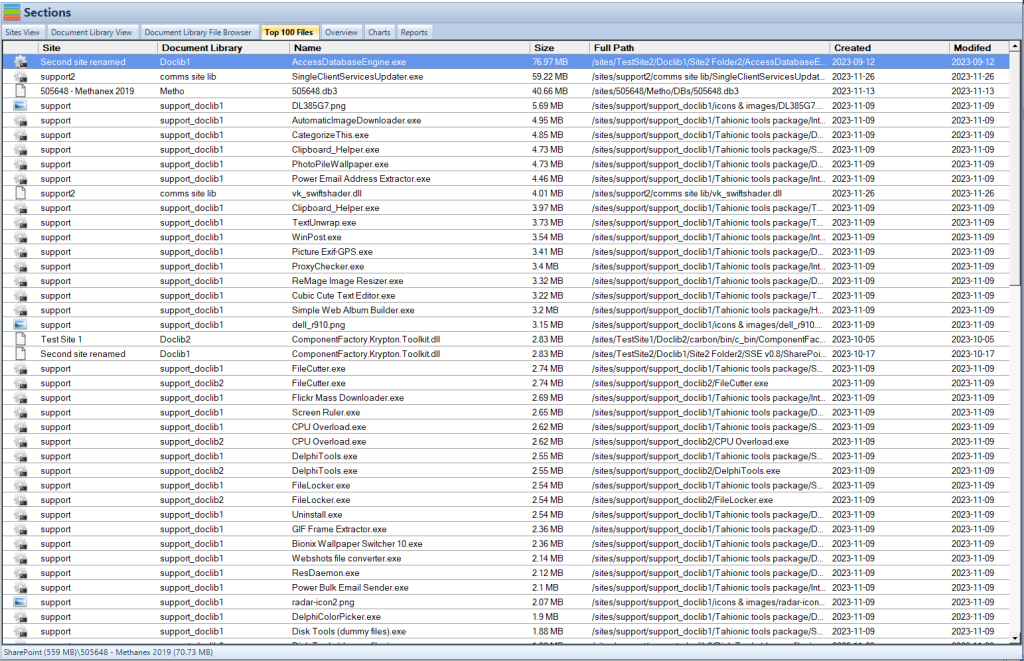
SharePoint Storage Explorer Top 100 Files
Automation: The Power Automate Integration
Imagine a workplace where mundane tasks are handled by a virtual maestro, orchestrating workflows with precision and intelligence. This is the domain of Power Automate in SharePoint Online, where automation transforms repetitive chores into automated processes, freeing human creativity for higher pursuits.
Workflow Automation: A Symphony of Efficiency Within this section, we’ll illustrate how to harness the power of Power Automate to create custom workflows that streamline operations. From simple notifications to complex multi-step processes, we’ll guide you through creating flows that not only work but also evolve with your organization’s needs.
Navigating the Data Deluge: Large Data Management in SharePoint Online
With ever-increasing data volumes, organizations must employ sophisticated strategies to manage SharePoint Online content effectively.
Effective Data Structuring
Optimal data structuring is achieved through careful planning of metadata schema and content types. Metadata, consisting of data about the files, like author or creation date, allows for powerful sorting, filtering, and searching capabilities that transcend traditional folder hierarchies. Indexing is another critical aspect, where SharePoint Online automatically indexes the first 20,000 items, but beyond that, manual indexing of columns is necessary to maintain performance.
Leveraging Content Types
Content Types encapsulate fields, forms, workflows, and behaviors associated with different kinds of documents. By creating and applying content types, you ensure standardization across different teams and departments. For instance, a “Contract” content type may include metadata fields for the contract date, parties involved, and expiration date, along with associated workflows for review and approval processes.
SharePoint Storage Explorer Overview
Gleaning Insights: Business Intelligence Tools with SharePoint Online
Business intelligence in SharePoint Online is about turning raw data into meaningful insights that can inform business decisions.
Power BI and SharePoint: A Data Duo
By integrating SharePoint Online with Power BI, users can tap into a rich set of analytics features. You can create reports and dashboards that draw from SharePoint lists and libraries, offering dynamic data visualization. For instance, Power BI can help visualize sales trends from a SharePoint list that tracks customer orders, providing interactive tools to slice and dice the data.
Advanced Analytics in SharePoint
SharePoint Online’s built-in analytics tools provide a comprehensive dashboard of site usage statistics, such as the number of users, activity levels, and content interaction. These insights are crucial for site owners to structure their content effectively and identify focus areas. For instance, if a specific library shows low engagement, it might benefit from better visibility or improved metadata for easier access.
In conjunction with these built-in tools, SharePoint Storage Explorer adds another dimension to your SharePoint analytics and management. Our tool specializes in in-depth storage analysis, offering detailed insights into the size and usage of each document library and site. With SharePoint Storage Explorer, you can identify not only which libraries are underutilized but also understand their storage impact. This information is vital for optimizing storage space and enhancing overall site performance.
For example, SharePoint Storage Explorer can reveal if a low-engagement library is consuming a disproportionate amount of storage or if there are large, outdated files that need attention. By integrating this storage-focused analysis with SharePoint Online’s user interaction metrics, site owners can make more informed decisions. They can restructure content not just based on user engagement but also considering optimal storage practices, leading to a more efficient and cost-effective SharePoint environment.
The Modern Site Experience: Branding and Design in SharePoint Online
The visual and interactive experience of SharePoint Online can significantly impact user engagement and adoption.
Customizing the Look and Feel
SharePoint Online offers extensive branding and customization options. With the modern SharePoint experience, site owners can apply custom themes that align with corporate branding, including logos, color palettes, and font styles. Additionally, the modern experience offers new web parts for embedding content like videos, integrating forms, or showcasing dynamic content.
Responsive Design for All Devices
SharePoint Online’s modern sites are built with a mobile-first approach, ensuring that content is readable and navigable on any device. This includes responsive menus, flexible grid layouts, and touch-friendly interfaces. For organizations, this means that employees can access SharePoint resources while on the go, without the need for zooming or side-scrolling, which is crucial in today’s mobile-centric world.
SharePoint Storage Explorer Reports
Conclusion: Embracing the Future with SharePoint Online
As businesses continue to rely on SharePoint Online, they must adapt to and prepare for its evolving landscape.
Preparing for SharePoint Updates
Staying up-to-date with SharePoint Online updates requires an active approach. Organizations should regularly check the Microsoft 365 Message Center and participate in the SharePoint community to learn about upcoming changes. Admins can use the SharePoint Online Management Shell to manage sites, automate tasks, and apply new settings across their tenant.
Encouraging Adoption and Change Management
Driving user adoption involves more than just technical readiness; it requires cultural change within the organization. Successful strategies include creating a network of SharePoint champions within various departments, providing comprehensive training, and gathering regular feedback to improve the platform continuously. It’s also vital to communicate the practical benefits SharePoint brings, such as improved collaboration and information management.
Cloud Storage Manager Map View
FAQs: Answering Your Advanced SharePoint Online Questions
To wrap up the article, we’ll address some of the most common questions users have about SharePoint Online’s advanced features.
How does SharePoint Online enhance data security? SharePoint Online enhances data security through features like advanced threat protection, which guards against malware and phishing attempts. Multi-factor authentication adds an extra layer of security before access is granted, while data loss prevention policies help prevent sensitive information from being shared inappropriately. Additionally, eDiscovery capabilities allow for the identification, holding, and analysis of content across SharePoint, which is crucial for compliance and legal cases.
Can SharePoint Online integrate with other Office 365 applications? Yes, SharePoint Online is designed to integrate seamlessly with the Office 365 suite, including Microsoft Teams for collaboration, OneDrive for individual file storage, and Office applications like Word and Excel for document creation and editing. This integration enables real-time co-authoring, sharing, and communication within the same ecosystem, providing a unified user experience.
What versioning capabilities does SharePoint Online provide? SharePoint Online’s versioning feature allows you to maintain a history of changes made to documents and lists, providing the ability to view and restore previous versions if needed. It tracks who made changes and when, offering a transparent audit trail. This is particularly useful for regulatory compliance and for maintaining the integrity of documents as they are updated.
How can I optimize SharePoint Online storage costs? To optimize SharePoint Online storage costs, you should regularly review and clean up unused content, implement retention policies, and utilize external storage solutions when appropriate. Understanding how SharePoint calculates storage usage and taking advantage of the default storage provided before purchasing additional space can also help control costs.
Is it possible to automate processes in SharePoint Online? Absolutely. SharePoint Online can be integrated with Power Automate to create automated workflows that streamline business processes, from simple tasks like notifications and approvals to complex operational workflows. These automations can help reduce manual workloads and improve efficiency across your organization.
How does SharePoint Online handle large datasets? SharePoint Online is equipped to handle large datasets with features like large list threshold management, indexed columns, and managed metadata. These features help in organizing and retrieving data efficiently, even when dealing with extensive libraries and lists. Additionally, SharePoint Online offers modern list and library experiences that support quick editing, bulk editing, and easy navigation of large volumes of data.
Can I use business intelligence tools with SharePoint Online? SharePoint Online can be integrated with business intelligence tools like Power BI to create interactive, data-rich reports and dashboards. You can connect SharePoint lists as data sources, use the insights to drive decisions, and even publish reports directly to SharePoint for broader access within your organization.
What customization options are available in SharePoint Online? SharePoint Online provides a range of customization options, including the ability to create custom site themes, design page layouts, and develop bespoke web parts with the SharePoint Framework (SPFx). These options allow organizations to tailor their SharePoint environment to align with their branding and functional requirements.
Are SharePoint Online sites mobile-responsive? SharePoint Online sites are designed to be mobile-responsive, meaning they automatically adjust to provide an optimal viewing experience on different devices, including smartphones and tablets. This responsiveness ensures that users can access SharePoint resources conveniently, regardless of the device they are using.
How can I prepare for future updates to SharePoint Online? Preparing for future updates in SharePoint Online involves staying informed about Microsoft’s release schedules, participating in the SharePoint community, and possibly joining the Office 365 targeted release program to get early access to new features. Additionally, regular training and adoption of best practices will ensure that your organization can smoothly transition to new updates when they become available.