Enhanced integration and document management functionalities
Introduction of exciting features like Syntex image tagger and Loop components in Outlook Mobile
Addressing user challenges through new updates
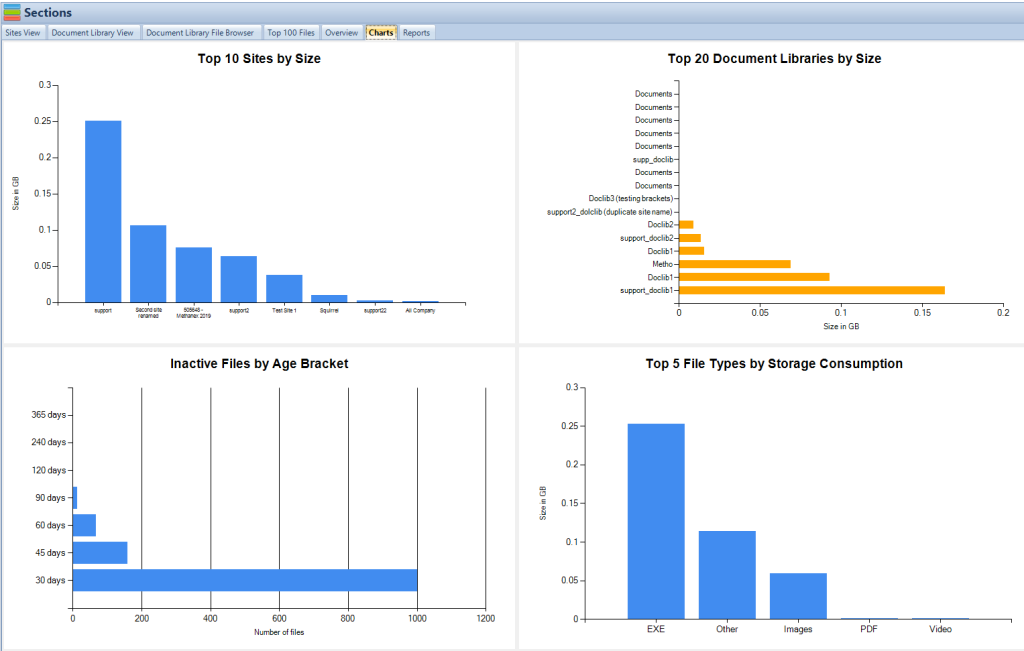
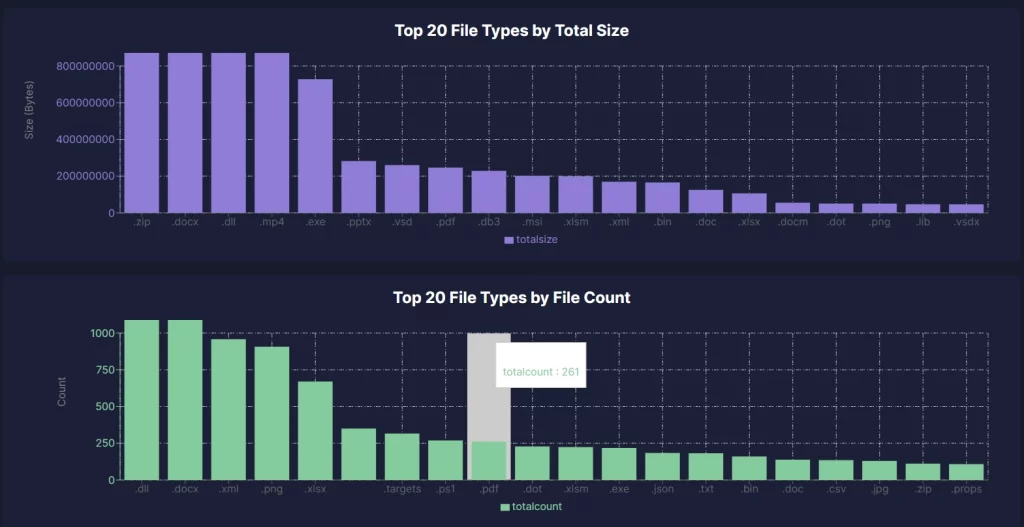
SharePoint Storage Explorer Charts
Enhanced Integration and Document Management
In the realm of collaborative platforms, SharePoint Online stands as a robust solution that continually evolves to meet the dynamic needs of modern enterprises. The 2023 updates have notably elevated the platform’s capabilities, particularly in terms of file and document management and integration with other Microsoft 365 offerings.
File and Document Management Improvements
SharePoint Online has always been recognized for its superior file and document management capabilities. The 2023 updates have brought a more streamlined approach to managing files, with enhancements allowing for the storage of documents in structured “document collections” within designated spaces like OneDrive or team sites. Furthermore, the robust permissions feature ensures a secure environment by allowing users varying access levels, from full control to view-only, ensuring that sensitive information remains protected1.
Please fill out the form below to get our free Ebook "Mastering SharePoint Online" emailed to you
FREE DOWNLOAD
Send download link to:
Integration with Other Microsoft 365 Offerings
The integration between SharePoint Online and other Microsoft 365 offerings has been significantly enriched. Features like a customizable Viva Connections mobile dashboard and Loop components in Outlook Mobile have been introduced, providing a more cohesive and interactive user experience across the Microsoft ecosystem. These features not only promote ease of access but also facilitate seamless communication and collaboration among teams, irrespective of their geographic locations2.
Unveiling SharePoint – Explore SharePoint as a cornerstone for fostering collaboration and managing content.
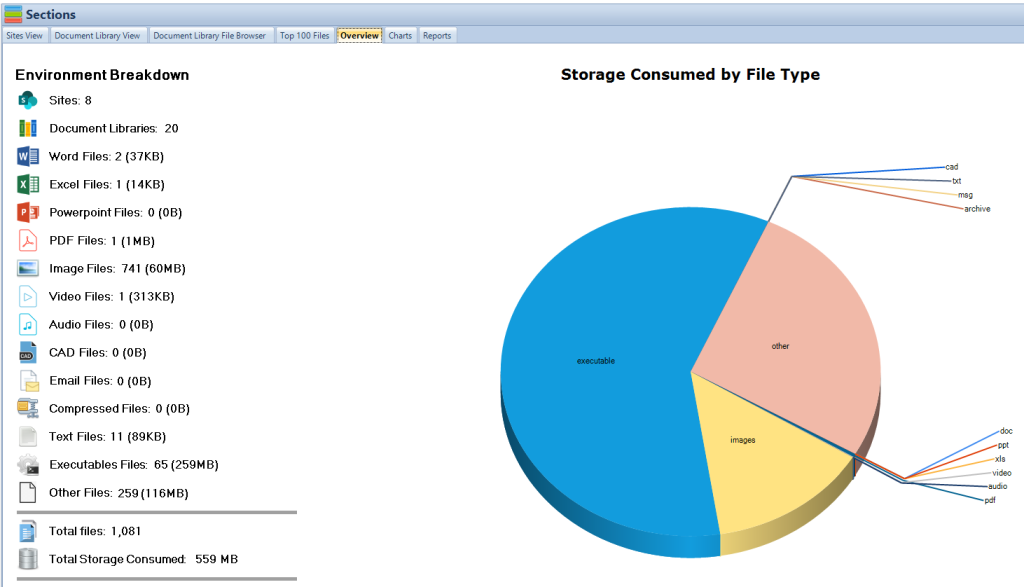
SharePoint Storage Explorer Overview
New Offerings and User Experience Enhancements
The 2023 updates bring forth a bounty of new offerings and user experience enhancements that are designed to tackle the contemporary challenges faced by organizations. These updates are a testimony to Microsoft’s commitment to delivering a user-centric platform that addresses real-world challenges.
Microsoft Syntex Enhancements
Microsoft Syntex has seen notable enhancements with the introduction of an image tagger and a prebuilt model for contracts. These features leverage AI to provide intelligent content services that automate the tagging and categorization of images and documents, thereby saving time and reducing manual effort.
In the rapidly evolving digital landscape, user challenges are inevitable. Microsoft, with its SharePoint Online 2023 updates, aims to address some of these challenges, making the platform more user-friendly and efficient. Meanwhile, the SharePoint ecosystem continues to grow, reflecting the platform’s robustness and adaptability.
Addressing User Challenges The latest SharePoint updates bring a range of exciting features designed to further enhance its capabilities and functionalities, aiming to address some of the most pressing challenges faced by users. Whether it’s streamlining workflow processes or ensuring data security, SharePoint Online is continually evolving to meet the diverse needs of its user base
SharePoint’s rapid growth is a testament to its efficacy as a collaborative platform. Now powering over 200 petabytes per month, SharePoint is facilitating new experiences across Microsoft 365, OneDrive, Microsoft Teams, and more. The integration and interoperability between these platforms enhance productivity and ensure a seamless user experience
SharePoint Storage Explorer
Gain insights in to your SharePoint Online Storage Consumption
Download our completely FREE TOOL
FREE DOWNLOAD
Send download link to:
SharePoint Storage Explorer
Step Up Your SharePoint Game – Free Download Available! Ready to elevate your SharePoint storage management? SharePoint Storage Explorer is your ticket to a streamlined and cost-effective SharePoint experience. Download it for free today and discover how easy and impactful managing your SharePoint can be!
Conclusion
The 2023 updates to SharePoint Online signify a significant stride towards a more integrated, user-friendly, and robust platform. As SharePoint continues to expand its ecosystem, integrating seamlessly with other Microsoft 365 offerings, it’s evident that the platform is evolving to meet the contemporary needs of modern enterprises. The new features and enhancements not only address the challenges faced by users but also pave the way for a more collaborative and efficient digital workspace. Differences Between SharePoint On-Premise and SharePoint Online – A comparison to understand the evolution and the benefits of SharePoint Online.
In the digital world, SharePoint holds a significant position, being a highly robust platform that caters to a multitude of collaborative needs. Among the rich features it offers, SharePoint Groups stand out as a fundamental building block for creating a conducive collaborative environment. These groups not only enhance interaction among team members but also provide a structured framework for managing permissions and access to resources. Before delving into the intricacies of creating a SharePoint group, it’s pivotal to grasp the basics of SharePoint and understand the significance of groups within this robust platform.
SharePoint Storage Explorer Overview
Understanding SharePoint
SharePoint, by Microsoft, is more than just a platform. It’s a collaborative environment that facilitates document management, information sharing, and communication within teams and organizations. With SharePoint, you can create websites, document libraries, and secure data storage spaces, making it a one-stop solution for many organizational needs.
Core Functionalities:
Document Management: Store, share, and manage documents with ease.
Team Collaboration: Create collaborative spaces for teams to work together seamlessly.
Information Sharing: Share information and updates in a structured and secure manner.
SharePoint Storage Explorer
Gain insights in to your SharePoint Online Storage Consumption
Download our completely FREE TOOL
FREE DOWNLOAD
Send download link to:
Importance of Groups in SharePoint
The essence of SharePoint is collaboration, and groups are the heartbeats of this collaboration. They provide a structured and secure way for team members to interact, share resources, and work together towards common goals.
Enhanced Collaboration:
Groups create a centralized space for team members, making collaboration efficient and effective.
They foster communication and ensure that everyone is on the same page.
Improved Security and Permissions Management:
Groups help in managing permissions, ensuring that only authorized individuals have access to certain information.
They provide a layer of security, ensuring that sensitive data remains protected.
SharePoint Storage Explorer Charts
Prerequisites for Creating a Group
Before you venture into creating a SharePoint group, there are certain prerequisites that you need to ensure are in place.
Required Permissions:
You need to have the necessary permissions to create a group in SharePoint. Typically, you would need to be a SharePoint administrator or have similar rights.
Necessary User Information:
Have a list of users and their email addresses who you wish to add to the group.
Getting to the group creation page is your first step in creating a SharePoint group. Here’s how you can navigate to the group creation page:
Navigating to the Group Creation Page
Steps to Reach Group Creation Page:
Log in to your SharePoint site.
Click on the settings (gear icon) at the top right corner of the page.
Select ‘Site Settings’ from the drop-down menu.
Under the ‘Users and Permissions’ section, click on ‘People and groups’.
Importance of Correct Navigation:
Navigating to the correct page is crucial as it’s the gateway to creating your group.
Ensuring that you’re on the right page will save time and prevent any confusion.
Creating a New Group
Now that you’ve navigated to the group creation page, it’s time to create your new group.
Choosing the Group Type (H3):
SharePoint offers various types of groups such as Owners, Members, and Visitors, each tailored for different levels of access and control. Select the one that aligns with your needs.
Naming the Group (H3):
Choose a descriptive and intuitive name for your group to ensure everyone understands its purpose.
Setting Group Permissions (H3):
Assign the necessary permissions based on the role and level of access each member should have.
Step
Action
Description
1
Login to SharePoint
Access your SharePoint site and login with your credentials.
2
Navigate to Group Creation Page
– Click on the settings (gear icon) located at the top right corner of the page.<br>- Select ‘Site Settings’ from the drop-down menu.<br>- Under the ‘Users and Permissions’ section, click on ‘People and groups’.
3
Initiate Group Creation
On the ‘People and groups’ page, find and click on the ‘New Group’ option.
4
Configure Group Settings
– Choose a name for your group that clearly represents its purpose.<br>- Select a group owner who will manage the group settings and memberships.<br>- Set up the group permissions based on the role and level of access each member should have.<br>- You can also set up how membership requests are handled in this step.
5
Add Members
– Add members by entering their email addresses or user names.<br>- Alternatively, if you have a list of members, use the ‘Import’ feature to add them in bulk.
6
Customize Group Appearance
Customize the group’s logo and navigation settings to align with your brand or team identity.
7
Utilize Group Features
Create document libraries, calendars, and task lists to facilitate collaboration within your group.
8
Review and Save
– Review all the settings to ensure they are correctly configured.<br>- Click on the ‘Create’ button to finalize the creation of your SharePoint group.
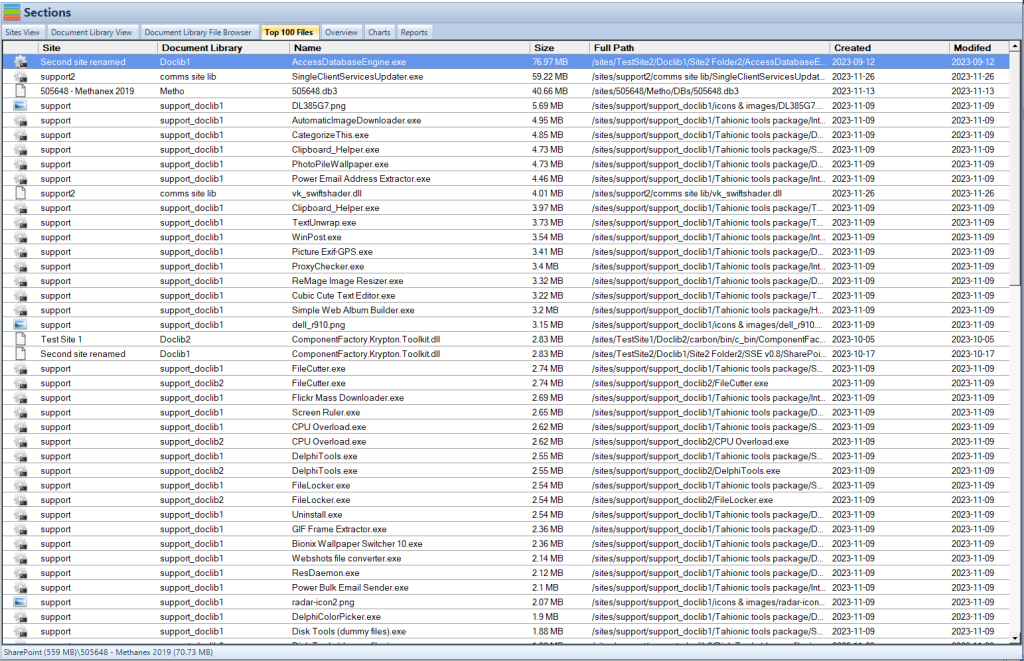
SharePoint Storage Explorer Top 100 Files
Mastering SharePoint Online
Please fill out the form below to get our free Ebook "Mastering SharePoint Online" emailed to you
FREE DOWNLOAD
Send download link to:
Configuring Group Settings
Once the group is created, configuring its settings to suit your team’s needs is imperative.
Setting up Group Owner (H3):
Assign a group owner who will have the administrative rights to manage the group settings and memberships.
Managing Group Membership Requests (H3):
Set up how membership requests are handled, whether they require approval and who can approve them.
Adding Members to Your Group
With the group now created and configured, it’s time to add members.
Inviting Members:
You can invite members by sending them an email invitation or by adding them directly if you have their user information.
Importing Members:
If you have a list of members, you can import them in bulk to save time.
Table of Key Takeaways (Halfway through the article)
Takeaway
Description
Group Types
Choose the right group type to align with the level of access required.
Naming Convention
A well-thought-out name helps in identifying the group’s purpose.
Permissions Setting
Proper permissions ensure secure and structured access to resources.
Group Ownership
Assigning a responsible group owner is crucial for effective management.
Membership Management
Streamline how members are added and how membership requests are handled.
Managing Group Permissions
Managing permissions effectively is crucial to maintain the security and functionality of your SharePoint group.
Understanding Permission Levels (H3):
SharePoint has several permission levels like Full Control, Edit, and Read. Understanding these levels helps in assigning the right permissions to group members.
Customizing Permissions (H3):
You can customize permissions to fit the specific needs of your group, ensuring that members have the access they need to perform their tasks.
Customizing Group Appearance and Navigation
Personalizing your SharePoint group can enhance user experience and align with your organizational branding.
Changing Group Logo (H3):
Customize the group logo to reflect your brand or the group’s identity.
Customizing Navigation Settings (H3):
Tailor the navigation settings to make it easy for members to find what they need.
Utilizing Group Features
SharePoint groups come with a variety of features to improve collaboration and manage resources.
Document Libraries (H3):
Utilize document libraries to organize, share, and manage documents within your group.
Calendars and Task Lists (H3):
Use calendars and task lists to keep track of deadlines, meetings, and project timelines.
Maintaining Your Group
Regular maintenance is essential to ensure that your SharePoint group remains effective and secure.
Regular Updates:
Keep your group updated with the latest information, and ensure that all members are aware of any changes.
Member Management:
Regularly review the member list, update permissions as needed, and handle membership requests promptly.
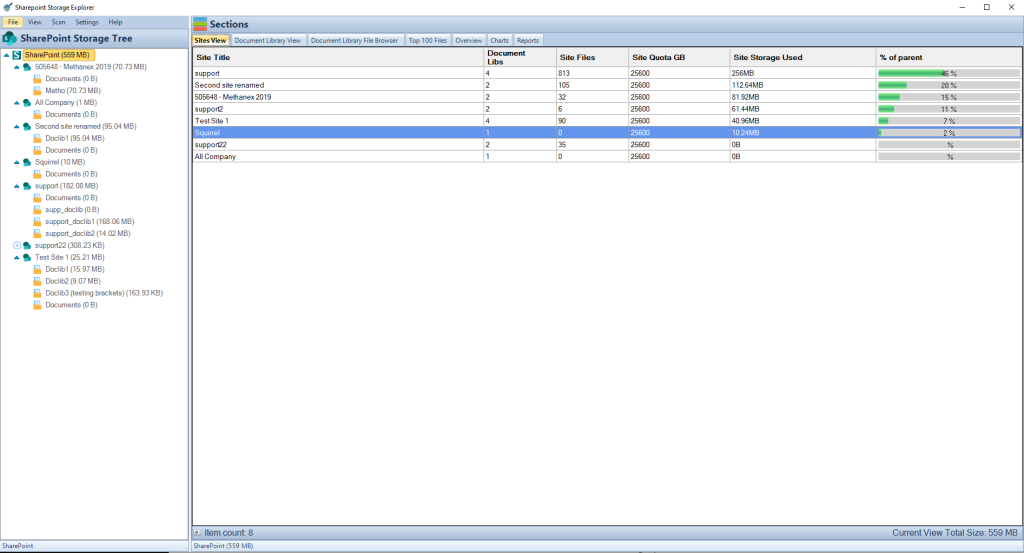
SharePoint Storage Explorer Main Windows
Common Challenges and Solutions
Creating and managing a SharePoint group can present some challenges. However, with the right approach, these can be easily mitigated.
Permission Issues:
Problems with permissions are common. Ensure you have a clear structure in place and that all members understand their level of access.
Communication Challenges:
Effective communication is vital. Utilize SharePoint’s communication features to keep everyone informed and engaged.
SharePoint Storage Explorer
Join the Revolution in SharePoint Management – Download Free Now! Embark on a journey of unparalleled efficiency with SharePoint Storage Explorer. This free tool is your key to unlocking advanced storage analysis and optimization in SharePoint. No more guesswork or cumbersome management tasks! Download our tool today and embrace a future where managing SharePoint storage is streamlined, insightful, and cost-effective. Your smarter SharePoint strategy is just a download away!
Conclusion
Mastering the creation of a SharePoint group requires a solid understanding of SharePoint’s functionalities, the importance of groups, and the steps involved in setting up a group. Through this comprehensive guide, you have learned the prerequisites for creating a group, the process of setting up a group, managing permissions, customizing your group’s appearance, and maintaining your group for long-term success. With this knowledge, you’re well on your way to harnessing the power of SharePoint to foster a collaborative and efficient working environment.
FAQs
What are the different types of groups in SharePoint?
SharePoint offers various types of groups like Owners, Members, and Visitors, each with different levels of permissions and capabilities.
How do I manage permissions in my SharePoint group?
Navigate to the permissions settings in your group to assign, modify, or revoke permissions based on user roles within the group.
Can I customize the appearance of my SharePoint group?
Absolutely, SharePoint allows customization of group appearance including logos and navigation settings to align with your brand or team identity.
How do I add members to my SharePoint group?
Adding members can be done through the ‘Add Members’ option within the group settings, where you can invite members via email or import a list of members.
What should I do if I encounter challenges in managing my SharePoint group?
Revisit the permissions settings, consult SharePoint documentation, engage with the SharePoint community, or consider seeking assistance from a SharePoint expert.
SharePoint: Empowering Collaboration and Efficiency
SharePoint Online is the backbone of modern teamwork and content management within Microsoft 365. Whether you’re sharing documents, building intranet portals, or automating workflows, SharePoint empowers organizations to work smarter and faster.
What Makes SharePoint So Valuable?
Document Management & Version Control: Maintain a single source of truth with built-in versioning, co-authoring, and metadata tagging.
Microsoft 365 Integration: Seamlessly connect with Teams, Outlook, and OneDrive for a unified collaboration experience.
Custom Intranets: Build department or project-specific sites to centralize communication and content.
Enterprise-Grade Security: Enjoy encryption, MFA, access controls, and compliance with industry regulations.
Powerful Search: Quickly find documents, people, and conversations across your entire organization.
Unlocking SharePoint’s Full Potential
SharePoint is more than a file server. It’s a flexible, secure, and scalable platform that adapts to your business needs. With features like metadata, retention policies, and Power Automate integration, you can streamline operations while improving compliance and collaboration.
Enhance SharePoint with Squirrel
As your document libraries grow, archiving becomes essential. Squirrel helps you manage SharePoint storage costs, performance, and compliance by automating the archiving of stale content to Azure Blob — without disrupting user access.
SharePoint is a foundation for digital transformation. With the right setup and tools like Squirrel, you can reduce costs, increase efficiency, and stay ready for whatever comes next.
Frequently Asked Questions About Microsoft SharePoint
1. What is SharePoint used for? SharePoint is primarily used for document management, collaboration, intranet portals, and automating business processes within organizations.
2. Is SharePoint included with Microsoft 365? Yes. SharePoint Online is included with most Microsoft 365 business and enterprise plans. It works alongside Teams, OneDrive, and other Microsoft services.
3. What’s the difference between SharePoint and OneDrive? OneDrive is personal cloud storage for individual users, while SharePoint is designed for team collaboration, document libraries, and site-based content sharing.
4. Can I use SharePoint without Teams? Yes. SharePoint is a standalone service and can be used independently. However, Teams uses SharePoint as its backend for file storage.
5. Is SharePoint good for small businesses? Absolutely. Even small businesses benefit from SharePoint’s secure document sharing, centralized storage, and workflow automation.
6. Can I build an intranet with SharePoint? Yes. SharePoint Online is ideal for building modern intranet portals with news, navigation, branding, and employee resources.
7. Does SharePoint support version history? Yes. SharePoint tracks version history automatically, allowing you to view or restore previous document versions.
8. Is SharePoint secure? Yes. SharePoint Online includes enterprise-grade security, compliance, encryption, access controls, and integration with Microsoft Purview (formerly Compliance Center).
9. Can I access SharePoint on mobile devices? Yes. There’s a SharePoint mobile app available, and SharePoint Online is fully responsive in mobile browsers.
10. What’s the difference between SharePoint Lists and Libraries? Lists are used to manage structured data like tasks or contacts, while libraries are for storing and managing files with metadata and versioning.
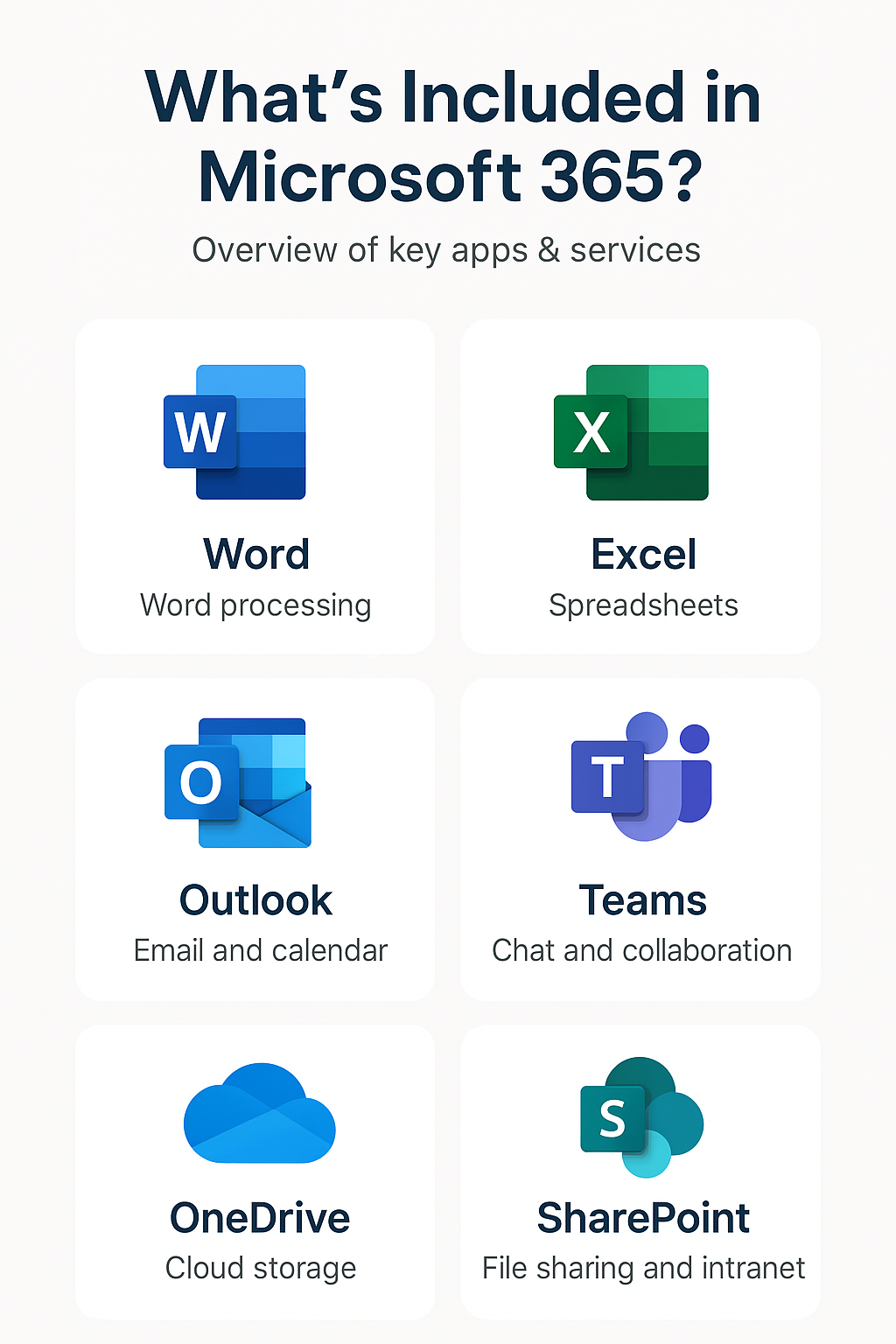
Microsoft 365 services—formerly known as Office 365—are a suite of enterprise-grade cloud solutions designed to power the modern workplace. These aren’t just apps like Word and Excel; they’re integrated services that handle communication, collaboration, data security, and productivity at scale.
Hosted in Microsoft’s secure cloud, these services eliminate the need for on-prem infrastructure while delivering unmatched flexibility, mobility, and control.
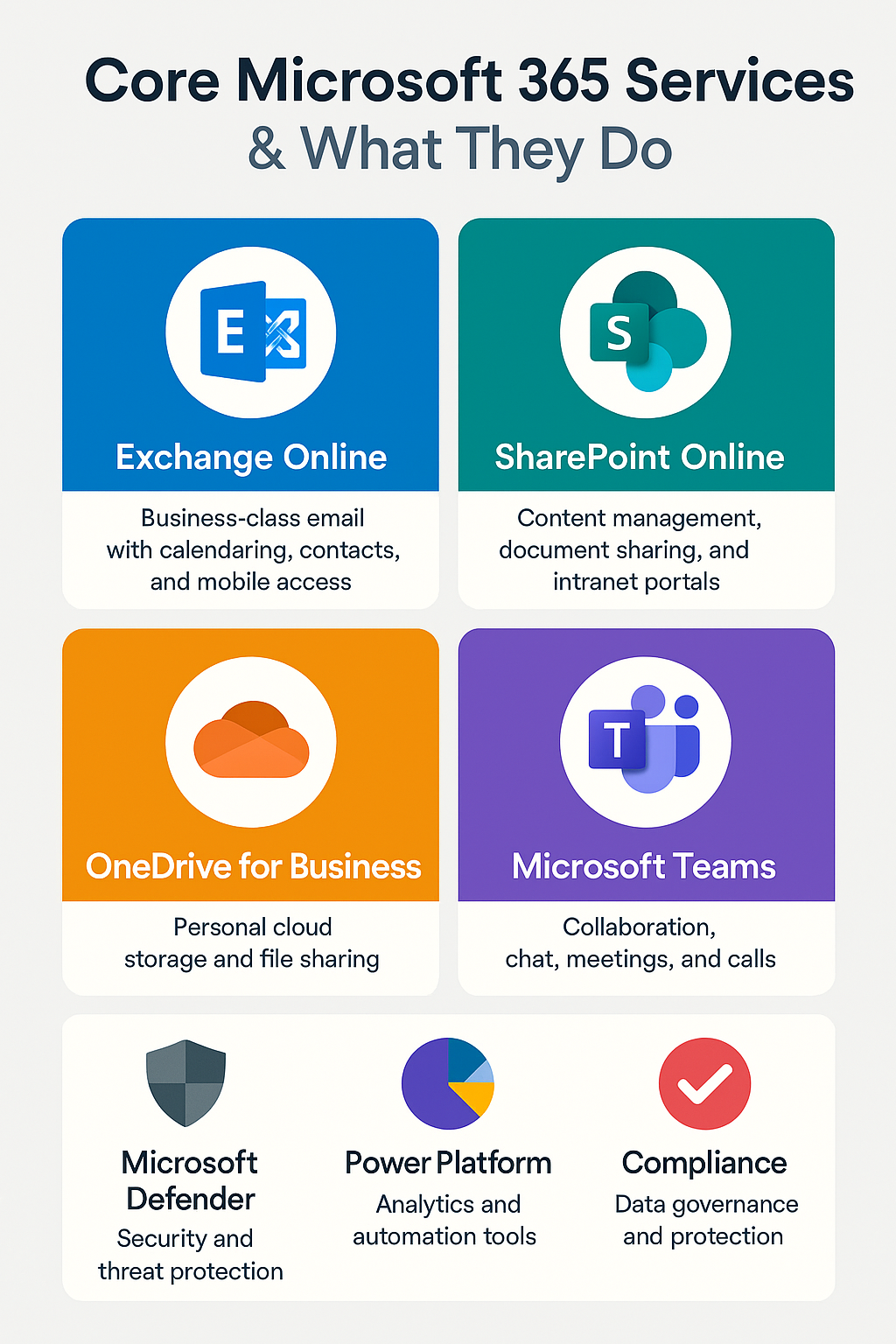
Core Microsoft 365 Services
Exchange Online: Enterprise-grade email, calendar, and contacts with built-in anti-spam and data protection.
SharePoint Online: Document management and team collaboration portals.
OneDrive for Business: Secure, personal cloud file storage with enterprise sharing controls.
Microsoft Teams: Chat, meetings, calls, and integrated workflows in one collaboration hub.
Microsoft Defender & Compliance Center: Advanced security, identity protection, and compliance features.
Power Platform: Power BI (analytics), Power Automate (workflow automation), and Power Apps (custom low-code apps).
Why It Matters
Microsoft 365 services offer a secure, scalable, and collaborative foundation for organizations of all sizes. Whether you’re a small team or a global enterprise, these services streamline your operations and unify your digital workplace under a single, trusted platform.
Benefits and Use Cases of Microsoft 365 Cloud Services
1. Exchange Online: Modern Business Email
With Exchange Online, you get a professional-grade email platform hosted by Microsoft. Users benefit from 50GB+ mailboxes, shared calendars, and mobile access—without the burden of maintaining an on-premises Exchange server.
2. SharePoint Online: Content and Knowledge Management
SharePoint Online is the backbone of internal collaboration. Create intranet sites, document libraries, workflows, and automated processes to keep your teams organized and efficient.
3. OneDrive for Business: Secure File Access Anywhere
Store personal work files securely in the cloud, and access them from any device. OneDrive integrates directly with Office apps and Microsoft Teams, allowing for seamless real-time collaboration and sharing.
4. Microsoft Teams: Communication & Collaboration Hub
Teams consolidates chat, video meetings, file sharing, and app integration into one platform. Create channels for departments or projects, host online meetings, and collaborate in real-time—whether you’re remote or in-office.
5. Microsoft Defender & Compliance Tools
Advanced security features protect your organization from phishing, ransomware, and data loss. Use tools like Data Loss Prevention (DLP), Microsoft Purview, and Conditional Access to stay compliant and secure.
6. Power Platform: Automate and Analyze
Power BI: Turn your business data into interactive dashboards.
Power Automate: Eliminate manual tasks with drag-and-drop workflow automation.
Power Apps: Create custom apps tailored to your business needs—no dev team required.
7. Real-World Use Cases
Enable hybrid work with secure remote access and cloud file sharing
Use Teams + SharePoint for project management and documentation
Implement Power Automate for automatic approvals and notifications
Protect sensitive data with DLP and eDiscovery in Microsoft Purview
SharePoint, born from the tech giant Microsoft, is not just another application; it’s a robust platform that’s been transforming the way businesses handle their internal processes for years. At its core, SharePoint is designed to streamline collaboration and document management. But what does that mean in layman’s terms? Imagine a vast digital library, where instead of books, you have documents, images, videos, and other digital content. Now, picture this library being accessible by anyone in your organization, from anywhere in the world, with the right permissions. That’s SharePoint for you. It offers a centralized space where teams can come together, share resources, and collaborate on projects without the hassle of juggling multiple applications or software.
The Evolution of SharePoint
The history of SharePoint is a testament to its adaptability and relevance in the ever-evolving tech landscape. Launched in 2001, it started as a simple document management system. However, with each version upgrade – from SharePoint 2003 to SharePoint 2019 and beyond – it has incorporated more functionalities. From integrating with Microsoft Office tools to offering cloud solutions with SharePoint Online, it has consistently adapted to the growing demands of businesses. The shift from being a mere document storage space to a comprehensive collaboration platform reflects how SharePoint has anticipated and met the changing needs of its users over the years.
SharePoint Storage Explorer Overview
Diving Deeper: Site Collections
SharePoint Storage Explorer
Gain insights in to your SharePoint Online Storage Consumption
Download our completely FREE TOOL
FREE DOWNLOAD
Send download link to:
Basics of a Site Collection
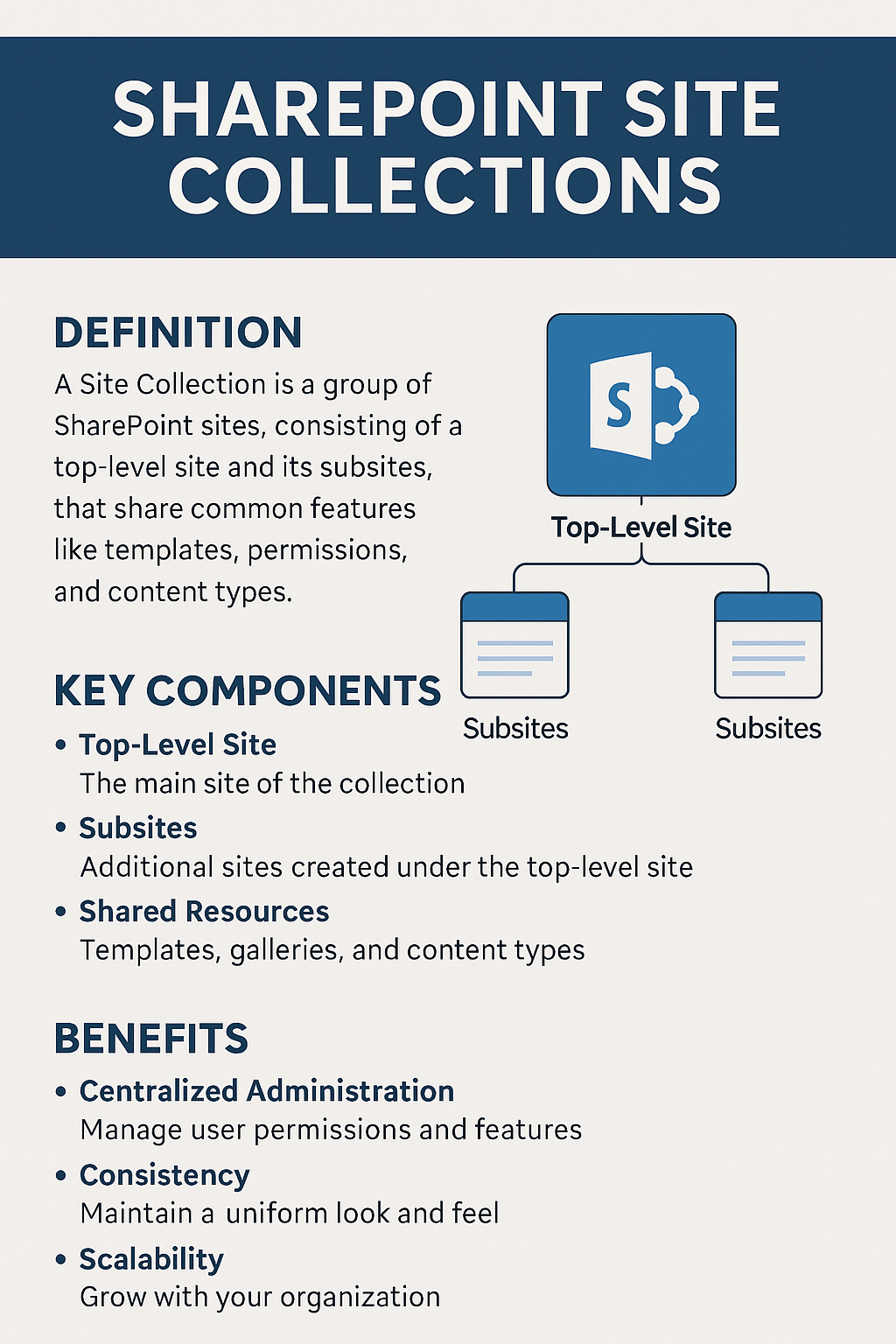
In the vast universe of SharePoint, a Site Collection is like a galaxy. It’s a hierarchical set of sites that can be managed together. Every Site Collection has one top-level site and can contain numerous subsites beneath it, just as a galaxy has a central star with many planets orbiting it. What differentiates a Site Collection from individual sites? The answer lies in its architecture. A Site Collection shares common features like templates, galleries, and content types, ensuring a uniform experience across all its sites. It’s a holistic structure, allowing businesses to compartmentalize different projects or departments yet manage them under one umbrella.
Why Are They Important?
The significance of Site Collections in SharePoint cannot be overstated. Imagine trying to manage a city’s electrical needs house by house rather than having a central power grid. Inefficient, right? Similarly, managing individual sites without the structure of a Site Collection can become chaotic. A Site Collection offers centralized administration, making tasks like user permissions, feature activations, and storage management streamlined. It ensures that while individual sites might serve different purposes, they all adhere to a common set of rules and structures set at the collection level.
Components of a Site Collection
Diving into the anatomy of a Site Collection, it’s fascinating to see the myriad components working in harmony. The ‘master pages’ dictate the overall look and feel of sites, ensuring a consistent user experience. Then there are ‘content types’, which are like predefined templates for content, ensuring uniformity in documents or items. The ‘list templates’ and ‘library templates’ offer structures for storing data, whether it’s a list of contacts or a library of documents. Additionally, ‘workflows’ can be set up to automate processes, making tasks like document approvals smooth. With ‘site columns’, data can be categorized efficiently, ensuring information is organized and easily retrievable.
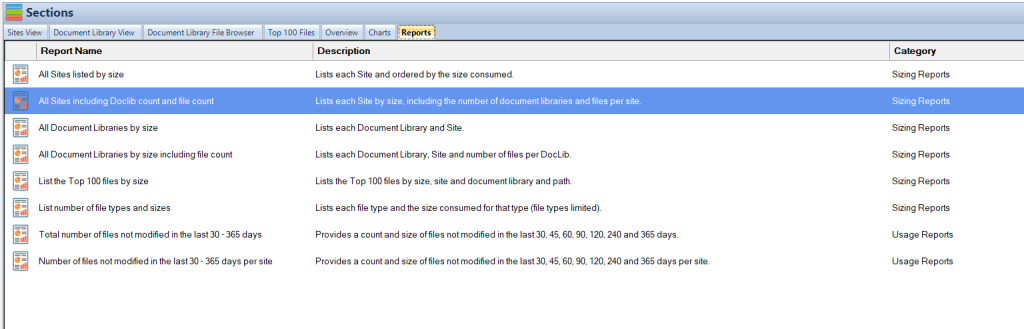
SharePoint Storage Explorer Reports
Benefits of Using Site Collections
Scalability
Scalability is one of the hallmark benefits of Site Collections. As businesses grow and evolve, their digital needs expand. The beauty of a Site Collection is its ability to scale with these growing needs. Whether you’re a startup just beginning your journey or a multinational corporation with a vast employee base, Site Collections can accommodate the breadth and depth of your digital content needs without compromising on performance or user experience.
Security and Permissions
In the digital age, data security is paramount. With cyber threats lurking at every corner, how does SharePoint ensure that its Site Collections remain fortresses? The answer is granular permission settings. At the Site Collection level, administrators can define who gets access to what. Whether it’s restricting a team to a specific project site or granting a department access to a particular document library, the controls are precise. This layered approach to permissions ensures that sensitive information remains secure and is accessible only to those who need it.
Mastering SharePoint Online
Please fill out the form below to get our free Ebook "Mastering SharePoint Online" emailed to you
FREE DOWNLOAD
Send download link to:
Customization and Branding
In today’s world, branding is everything. It’s not just about logos or taglines; it’s about creating a unique identity. SharePoint recognizes this and offers extensive customization options for Site Collections. Beyond the out-of-the-box templates, businesses can tailor their SharePoint environment to reflect their brand ethos. From custom master pages that define the visual layout to unique site templates that cater to specific business processes, the possibilities are vast. This ensures that while the backend functionalities remain robust and consistent, the frontend can be as unique as the brand it represents.
SharePoint Storage Explorer Main Windows
Common Misconceptions
Understanding the Dynamics: Site Collection vs. Subsite
In the SharePoint ecosystem, grasping the fundamental differences between Site Collections and Subsites is crucial for effective site architecture planning and management. These elements, though closely related, serve distinct purposes and are structured differently within SharePoint.
Site Collection: The Foundation of SharePoint Architecture
A Site Collection is essentially the cornerstone of SharePoint’s architecture, acting as a top-level container that houses all the sites under a common domain or pathway. Think of a Site Collection as a self-contained entity with its own settings, features, and content database. It’s a standalone environment where you can define global settings such as permissions, content types, navigation, and features that are inherited by subsites within the collection.
The main attributes of a Site Collection include:
Unique URL Namespace: Each Site Collection has a unique address, making it independently accessible.
Dedicated Content Database: Site Collections can be associated with specific content databases, facilitating easier management and scalability.
Central Administration: Allows for centralized governance over settings, permissions, and features, applying uniformly across all contained sites.
Subsite: The Integral Components of a Site Collection
Subsites, in contrast, are akin to subdivisions within a Site Collection, structured beneath the top-level site. They inherit permissions, templates, and settings from their parent site but can also be configured with some level of autonomy. Subsites allow for a more granular organization of content, enabling departments, teams, or projects to have their tailored space within the overarching framework of the Site Collection.
Characteristics of a Subsite include:
Inheritance and Customization: While subsites inherit the parent site’s settings, they can also have customized permissions, navigation, or features as needed.
Hierarchical Organization: Subsites can be nested, allowing for complex organizational structures with multiple levels of depth.
Shared Resources: Utilizes shared libraries and lists from the parent site collection, encouraging resource centralization and consistency.
Visualizing the Relationship
To further clarify, imagine a corporate intranet as a Site Collection. This intranet (the Site Collection) serves as the main entry point for all company resources, policies, and news. Within this intranet, different departments like HR, IT, and Marketing might have their own subsites. Each department’s subsite functions as a distinct branch within the larger tree, tailored to the specific needs and functions of that department. These subsites can further contain their own nested subsites, for team projects or committees, for example, mirroring smaller branches and leaves sprouting from the departmental branches.
Key Takeaways
Autonomy vs. Integration: Site Collections offer a level of autonomy with dedicated settings and databases, whereas subsites are more integrated, sharing resources and settings with their parent site.
Scope of Management: Site Collections require a broader scope of governance, often involving IT or central SharePoint administrators, while subsites typically allow for more localized management by department heads or project leaders.
Use Cases: Choosing between a Site Collection and a subsite depends on the specific needs for autonomy, security, content organization, and scalability. Large, distinct areas of operation might warrant separate Site Collections, while more integrated or smaller-scale collaborations benefit from the subsite structure.
Understanding the distinct roles and functionalities of Site Collections and Subsites enables organizations to architect their SharePoint environment more effectively, ensuring that it aligns with their operational structure and collaboration needs.
Site Collection Limitations
No system is without its limitations, and Site Collections are no exception. One of the primary constraints is the storage quota. SharePoint sets a maximum storage limit for each Site Collection. While this is generous and caters to most business needs, it’s essential to be aware of and plan accordingly. Additionally, while Site Collections offer centralized administration, certain settings, once set, can’t be modified at the subsite level. This rigidity can sometimes pose challenges, especially if subsites have diverse needs.
SharePoint Storage Explorer
Free Download: Maximize Your SharePoint Efficiency! Discover the full potential of your SharePoint with our Storage Explorer. This tool, available for free download, is designed to seamlessly integrate into your workflow, providing powerful analytics and intuitive management solutions. With SharePoint Storage Explorer, you can efficiently audit, analyze, and optimize your storage, leading to significant improvements in performance and cost savings. Start your journey towards a more effective SharePoint today!
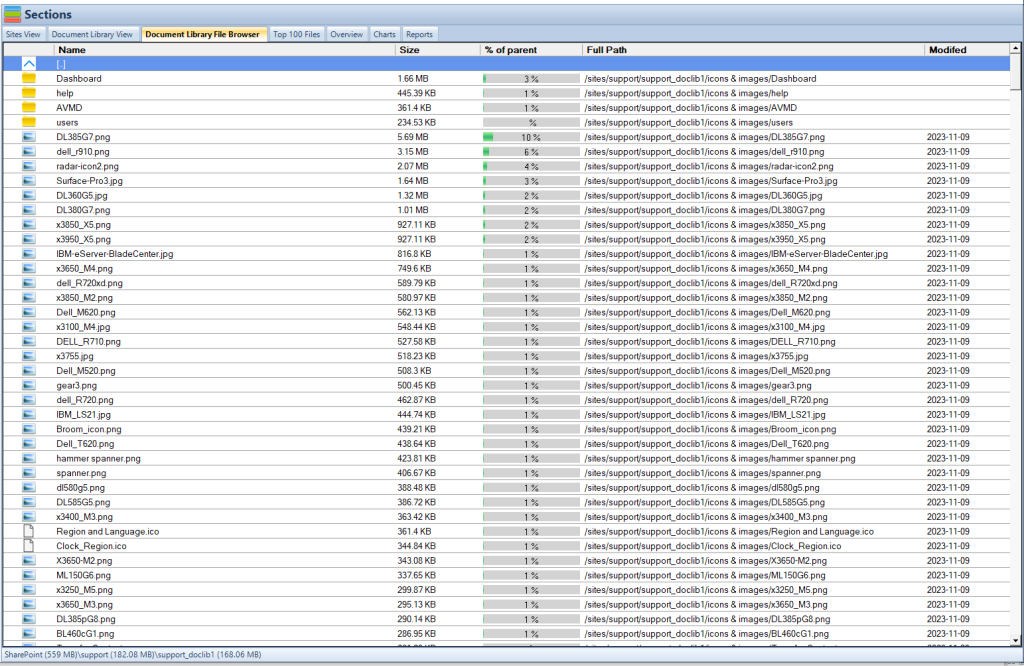
SharePoint Storage Explorer File Browser
Conclusion
To navigate the vast seas of digital collaboration and document management, tools like SharePoint are invaluable. And within SharePoint, understanding and leveraging the power of Site Collections can be the difference between seamless collaboration and digital chaos. By offering a structured, scalable, and secure environment, Site Collections empower businesses to harness the full potential of SharePoint. Whether you’re just starting your SharePoint journey or are a seasoned pro, appreciating the nuances of Site Collections can elevate your digital collaboration game.
FAQs
What is the main difference between a Site and a Site Collection?
A Site Collection is a hierarchical container for sites. While a Site is an individual entity within this hierarchy.
Can I have multiple Site Collections?
Yes, SharePoint supports the creation of numerous Site Collections, catering to diverse organizational needs.
How do permissions work within a Site Collection?
Permissions can be defined at the Site Collection level, providing centralized control over access. These can also be further refined for individual sites within the collection.
Is there a limit to how many subsites a Site Collection can have?
While SharePoint technically supports a vast number of subsites under a Site Collection, for optimal performance and ease of management, it’s advisable to plan the structure thoughtfully.
Can I customize the appearance of my Site Collection?
Absolutely! SharePoint provides a plethora of customization options, allowing businesses to align their Site Collections with their brand identity.