
The hidden cost problem most leaders never see
Most executives assume that moving to Microsoft 365 simplifies cost control. Storage is “in the cloud”, usage is elastic, and governance is handled through policy.
In reality, many organisations face a very different experience. They invest heavily in retention policies to meet legal and regulatory requirements, yet their SharePoint storage costs continue to rise year after year, even after large cleanup programs.
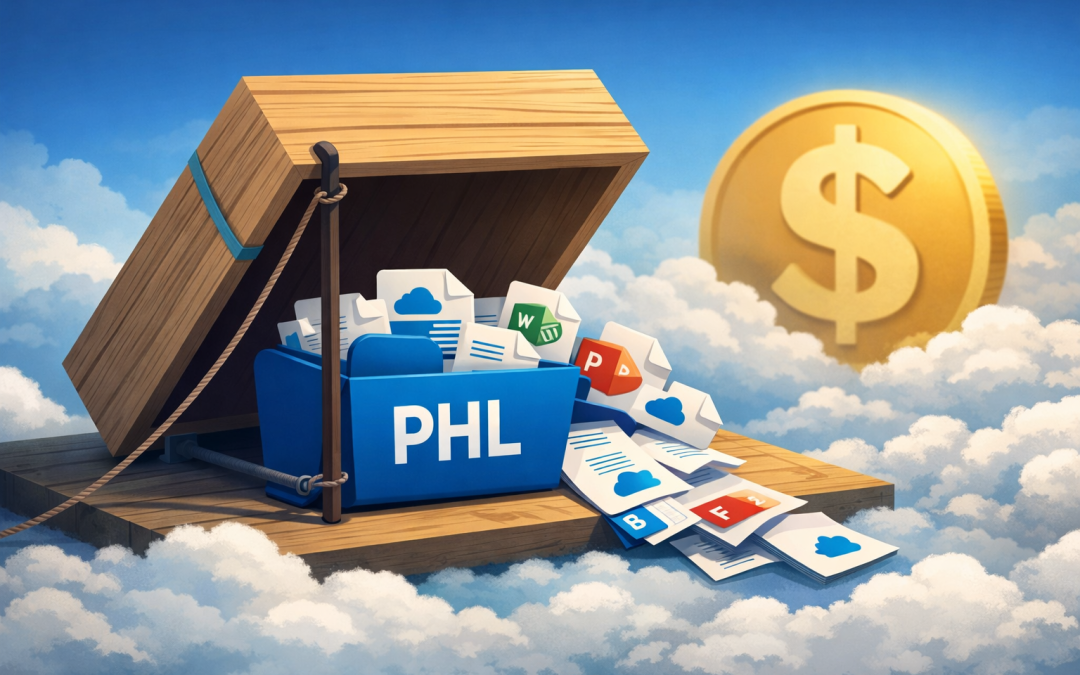
The primary driver of this issue is the SharePoint Preservation Hold Library, commonly called the PHL. It is invisible to day to day operations, but highly visible in your storage bill.
This article explains why that happens, why traditional approaches often fail, and how a different model using Squirrel’s Recycle Bin Capture can deliver compliance without runaway costs.
Why retention can create financial risk
Retention policies are designed to protect organisations from legal exposure. That is sensible. What is less obvious is that these same policies can create significant financial risk if not designed carefully.
Every time a file is deleted, replaced, or modified in SharePoint, a preserved copy may be stored in the PHL. Over time this compounds into tens or hundreds of terabytes of hidden data that still counts toward your Microsoft 365 limits.
From a leadership perspective, this creates three problems.
- First, costs become unpredictable. Storage grows in ways that are difficult to forecast or explain.
- Second, governance appears strong on paper, but in practice it is inefficient. You are paying premium SharePoint prices to store material that no one actively uses.
- Third, cleanups and migration programs do not deliver the expected return on investment because deleted data is still being preserved.
Why “just delete more” does not solve the problem
Many organisations try to control costs by removing old sites, deleting inactive Teams, or running bulk cleanups.
Under retention, this rarely works. Deletion simply moves content from visible SharePoint libraries into the hidden Preservation Hold Library. The tenant storage total often barely changes.
For a CIO, this is a classic mismatch between effort and outcome. Large governance projects consume time and resources but do not materially reduce cloud spend.
Where the real cost sits
SharePoint storage is among the most expensive storage you pay for in Microsoft 365. Keeping long term records there by default is essentially choosing a premium archive.
The PHL reinforces this pattern. It keeps everything inside SharePoint rather than allowing organisations to separate active collaboration from compliant record keeping.
The result is a structural cost problem, not a tactical one.
A different approach that aligns cost with risk
Squirrel’s Recycle Bin Capture offers a model that better aligns compliance risk with storage cost.
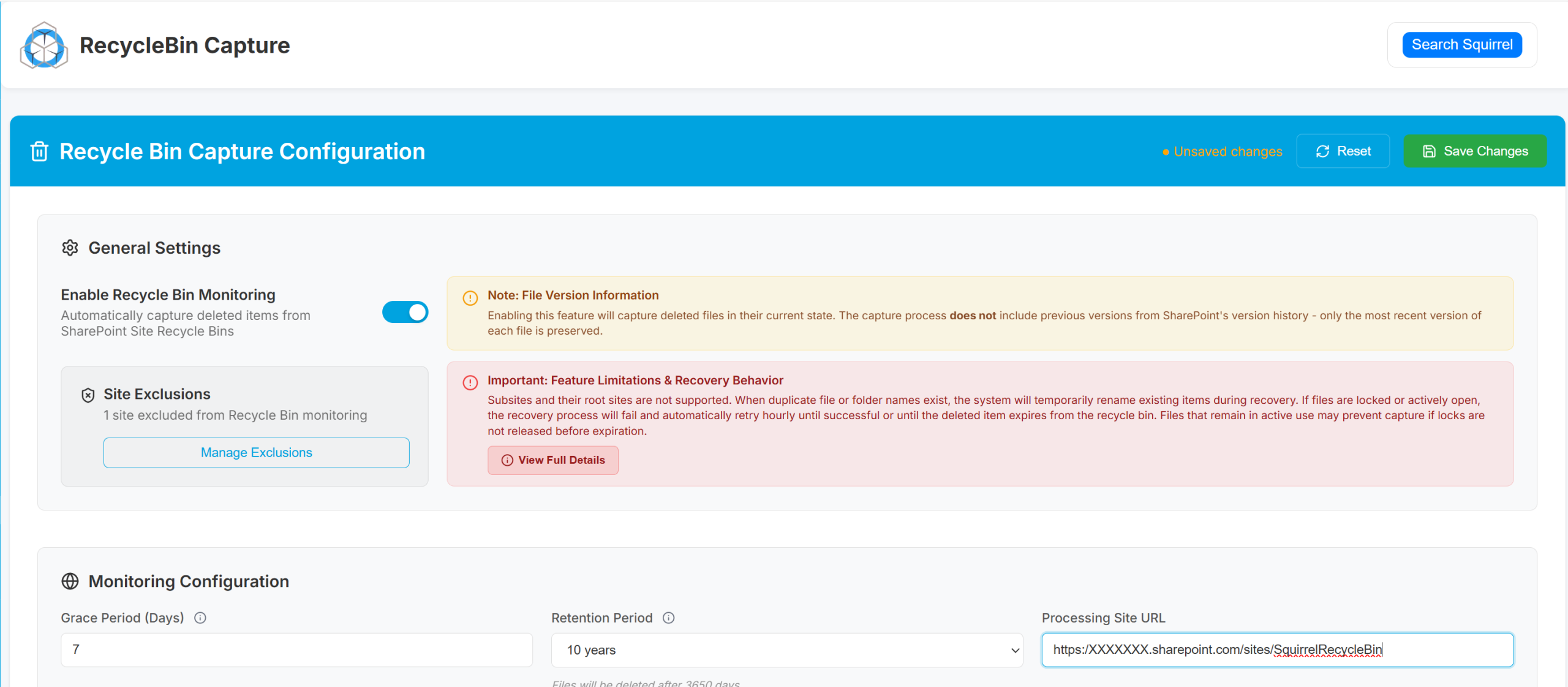
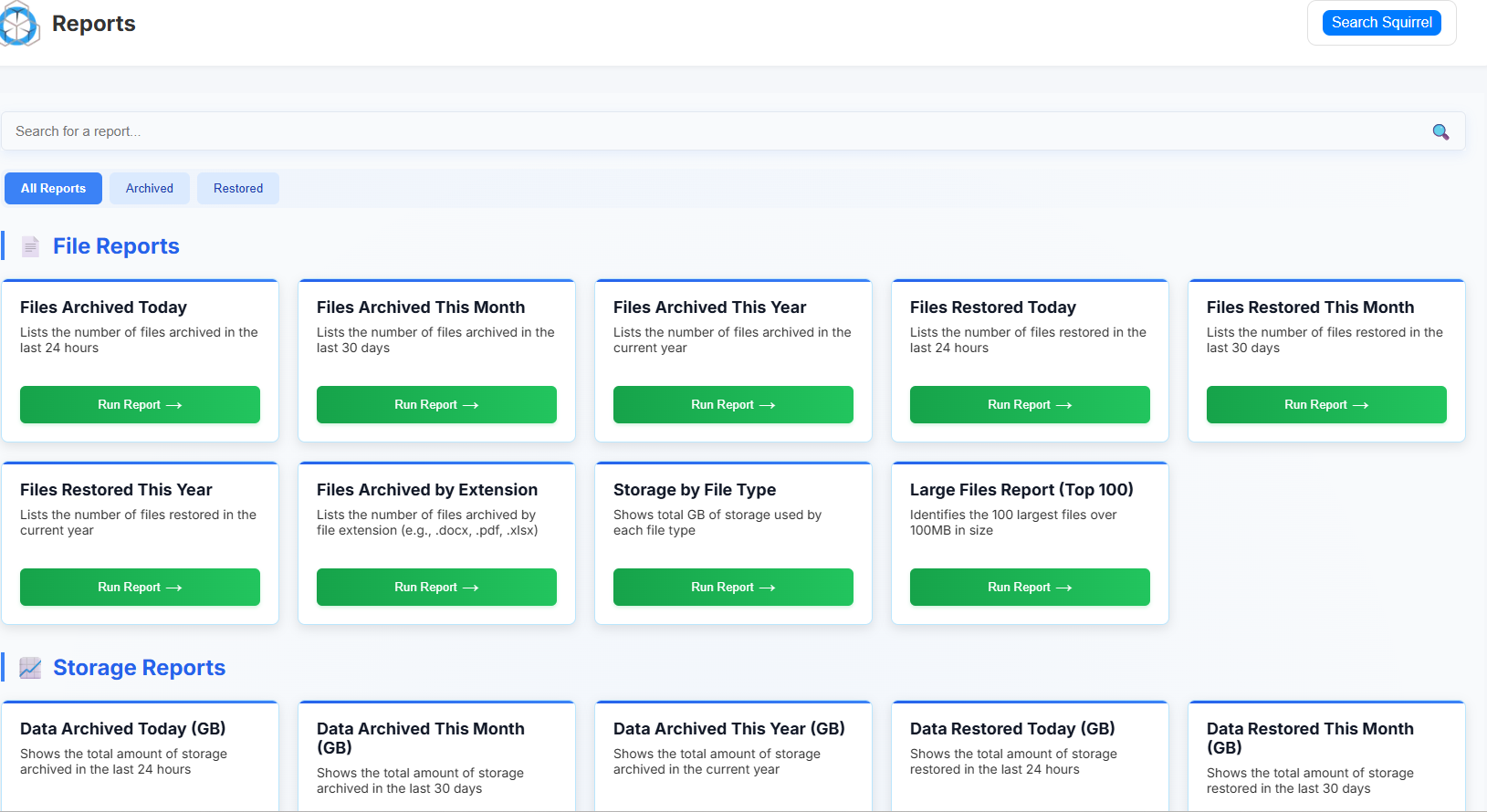
Instead of preserving every deleted document inside SharePoint, Squirrel monitors the SharePoint recycle bin across your tenant. After a configurable period, typically around seven days, deleted files are automatically moved to secure, low cost Azure Blob storage.
To keep this practical for users and administrators, Squirrel creates a dedicated SharePoint site, commonly called Recycle Bin Capture. For every deleted file, a lightweight stub is placed in this site.
This means records are still preserved and recoverable, but they no longer sit in expensive SharePoint storage. From a business perspective, you keep control without paying a premium for every byte.
Preservation Hold Library versus Squirrel Recycle Bin Capture
| Dimension | SharePoint Preservation Hold Library (PHL) | Squirrel Recycle Bin Capture |
|---|---|---|
| Visibility | Hidden and difficult to measure | Fully visible and auditable via a dedicated site |
| Primary storage | SharePoint tenant storage | Azure Blob storage |
| Impact on Microsoft 365 limits | Increases tenant storage consumption | Does not inflate SharePoint limits |
| What drives preservation | Purview retention policy behaviour | User deletion to recycle bin |
| Timing control | Broad and policy driven | Precisely configurable (for example, after 7 days) |
| Recovery experience | Requires admin or eDiscovery workflows | Simple restore via SharePoint stub |
| Cost predictability | Hard to forecast | Highly predictable and measurable |
| Effect of cleanup programs | Often neutral or negative on storage | Material reduction in SharePoint storage |
| Compliance position | Native Microsoft retention mechanism | Valid retention pattern that preserves records externally |
| Long term scalability | Financially challenging | Economically sustainable |
Why this matters to the executive agenda
For a CIO, this is not a technical debate. It is a strategic one.
Organisations need to retain information for legal and regulatory reasons, but they should not have to store that information in the most expensive platform available.
Squirrel’s model allows you to meet compliance obligations while materially reducing ongoing cloud costs. SharePoint becomes a collaboration environment rather than a de facto archive.
Equally important, costs become predictable. You can model Blob storage growth in a straightforward way, rather than guessing how the PHL might expand.
When the PHL still plays a role
Some industries require strict Microsoft retention controls regardless of cost. In those cases, the goal shifts from elimination to management.
Even then, moving inactive content out of SharePoint with an archiving tool like Squirrel reduces pressure on live storage and slows overall cost growth. It is a way to mitigate, rather than accept, the financial impact of preservation.
What strong governance looks like
Effective governance balances three things.
- Compliance, ensuring you can demonstrate retention and retrieval when required.
- Cost, ensuring you are not overpaying for storage you do not actively need.
- Simplicity, ensuring your teams can actually find and restore information without complex legal workflows.
- A recycle bin capture model supports all three.
The leadership takeaway
- Deleting content does not reduce storage when retention applies.
- The Preservation Hold Library can quietly become one of your largest cloud cost drivers.
- Traditional cleanup programs often fail to deliver financial benefits.
- A structured approach that moves preserved content to lower cost storage can achieve compliance and cost control at the same time.
Next steps for decision makers
If you are concerned about rising Microsoft 365 storage costs, it is worth reviewing how retention is currently implemented in your tenant.
We can help you estimate your existing PHL exposure, forecast future growth, and quantify potential savings using Squirrel’s Recycle Bin Capture.
This is not about abandoning compliance. It is about achieving it in a way that makes financial sense.
A Practical Checklist for Managing PHL Storage Growth
- Audit your current Preservation Hold Library size — this is visible in the SharePoint admin centre under Storage metrics
- Review which retention policies are generating the most PHL content — policies applied to high-churn libraries will generate disproportionate PHL growth
- Assess whether all retained content genuinely requires primary SharePoint storage — content past its active phase can often be moved to lower cost archive storage without affecting compliance
- Implement Squirrel’s Recycle Bin Capture to intercept deletion events before they generate PHL copies
- Review versioning settings across your document libraries — excessive version limits are a major driver of PHL growth
- Set up storage monitoring and alerts so PHL growth is visible to IT before it becomes a billing problem
- Review retention policies annually — overly broad policies that apply to content that does not need to be retained create unnecessary PHL accumulation
Frequently Asked Questions About the SharePoint Preservation Hold Library Storage Trap
Q: Why does my SharePoint storage keep increasing even after a large clean-up? A: If retention policies or legal holds are active, deleted and modified files are copied to the Preservation Hold Library before removal. Clean-up exercises often trigger large batches of preservation events, meaning deleting a large number of files can actually increase total storage consumption rather than reducing it.
Q: Can I reduce Preservation Hold Library storage without disabling retention policies? A: Yes. Squirrel’s Recycle Bin Capture feature intercepts deletion events before they generate PHL copies, routing content directly to Azure Blob Storage instead. This reduces PHL growth without disabling or circumventing your retention policies or affecting compliance.
Q: Does the Preservation Hold Library count against my Microsoft 365 storage quota? A: Yes. PHL content consumes the same SharePoint Online storage quota as your active document libraries. It is one of the most common causes of unexpected storage overage charges because it grows silently and is not visible to regular users or most administrators.
Q: Why does the Preservation Hold Library grow faster than expected? A: The PHL captures not just deleted files but also every version of every modified document when retention is active. In high-churn environments — where documents are frequently edited, replaced, or deleted — the PHL can grow many times faster than the active library that generated it.
Q: Is content in the Preservation Hold Library accessible for eDiscovery? A: Yes. The PHL is specifically designed to make content available for compliance and eDiscovery purposes. Content in the PHL is retained in a tamper-resistant state and is accessible to compliance administrators through Microsoft Purview eDiscovery tools.
Q: How does Squirrel’s Recycle Bin Capture work? A: Squirrel’s Recycle Bin Capture monitors deletion events in SharePoint. Instead of allowing deleted files to pass through the standard recycle bin process and into the Preservation Hold Library, Squirrel intercepts them and archives them directly to Azure Blob Storage. A stub file remains in SharePoint for user access and compliance purposes, while the actual file sits in lower cost storage rather than in the PHL.
Squirrel Recycle Bin Capture cuts SharePoint costs without losing compliance.
Instead of letting the Preservation Hold Library quietly inflate your Microsoft 365 storage, Squirrel preserves deleted content in low cost Blob storage while keeping it easily recoverable in SharePoint.
Cut SharePoint costs with Squirrel Recycle Bin Capture
By moving deleted files to low cost Blob storage instead of leaving them in the Preservation Hold Library, Squirrel materially reduces ongoing Microsoft 365 storage spend while keeping records recoverable.