What Is the SharePoint Recycle Bin?
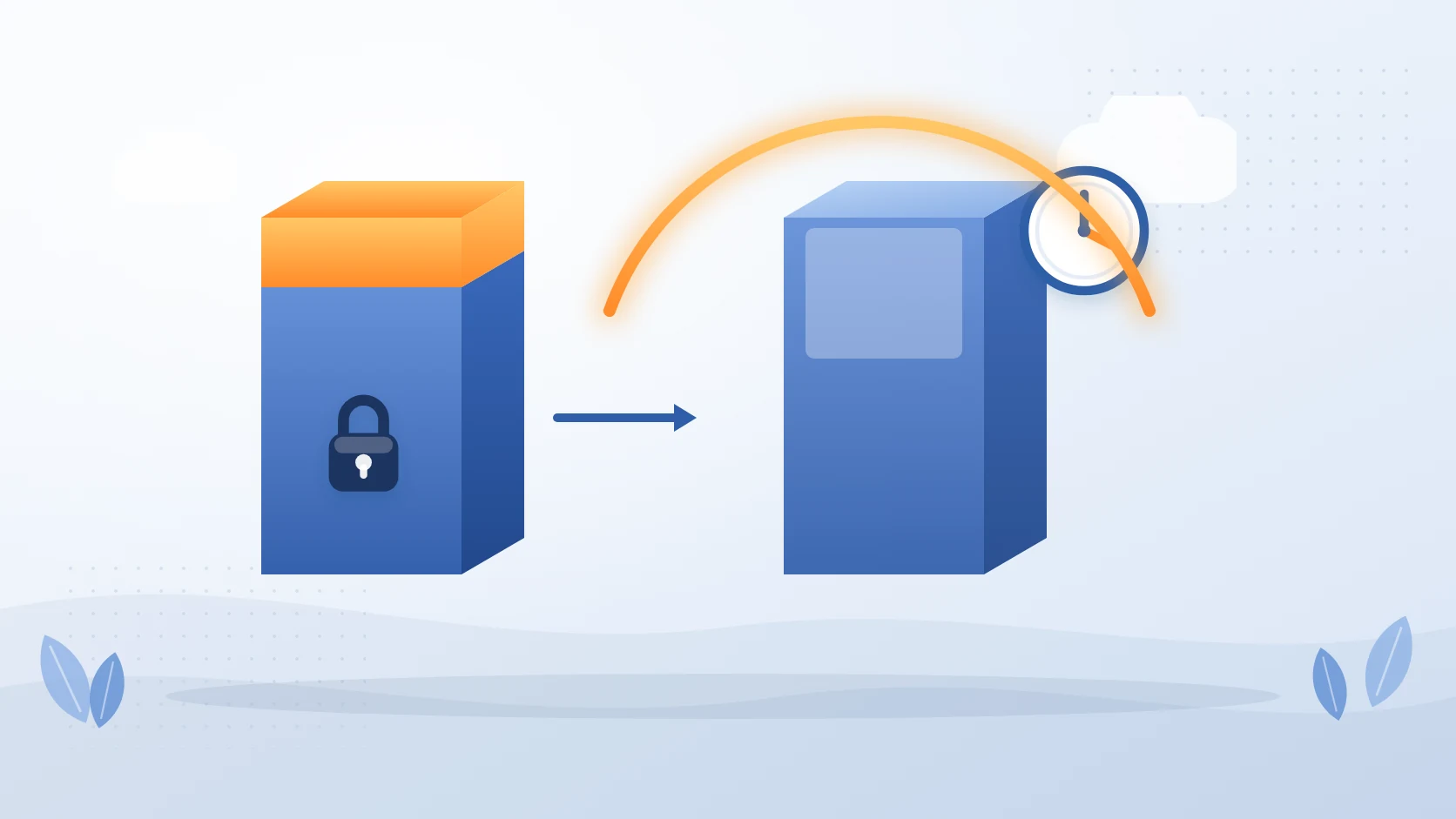
The SharePoint recycle bin is where files, folders, list items and even whole document libraries go when they are deleted from SharePoint Online or OneDrive - a safety net that lets you restore deleted content instead of losing it immediately. What trips most people up is that there are two stages, and once content ages out of both, it is gone for good.
Once something has aged out of both stages there is no native way back, which is why the last section covers capturing deleted files into your own Azure storage with Squirrel before the bins expire them.
- First-stage (site) recycle bin - the one end users see. When someone deletes a file, it lands here and they can restore it themselves.
- Second-stage (site collection) recycle bin - when an item is deleted from the first-stage bin, or the first-stage bin is emptied, it moves here. Only a site collection administrator can see and restore from the second stage.
This guide covers how to restore from both stages, how to do it in PowerShell, exactly how long you have, and - the part Microsoft's own tools have no answer for - how to get back a file that has already aged out.

How to Restore Deleted Files from the SharePoint Recycle Bin
For anything a user deleted themselves, the first-stage recycle bin is the fastest route:
- Open the SharePoint site (or OneDrive) the file was deleted from.
- In the left navigation, select Recycle bin.
- Find the deleted file or folder - you can sort by the date deleted or who deleted it.
- Select it and choose Restore. It returns to its original location, with its version history intact.
To restore several items at once, tick multiple entries (or the header checkbox to select all) and choose Restore - a straightforward way to bulk-restore deleted SharePoint files.
Where to Find the SharePoint Recycle Bin
Open the site, then select Recycle bin in the left navigation. If it is not there, go to Settings, then Site contents, and the recycle bin link sits at the top right of that page.
Two things confuse people here. The recycle bin is per site, not per tenant, so a file deleted from one site does not appear in another site's bin. And OneDrive has its own separate recycle bin, reached from the OneDrive left navigation rather than from SharePoint.
Site owners see everything deleted from the site. Ordinary members see only what they deleted themselves, which is why a colleague can often see an item you cannot.
How to Search the SharePoint Recycle Bin
Use the search box at the top of the recycle bin page. It matches on file name only, not on file contents.
That limitation matters when you are looking for something you cannot name exactly. Two ways round it:
Sort instead of search. The recycle bin can be sorted by Date deleted, Deleted by, and Original location. If you know roughly when it went or who removed it, sorting gets you there faster than guessing at the name.
Use PowerShell for anything larger. Get-PnPRecycleBinItem returns every item with its full metadata, which you can filter on any field rather than just the name:
# Everything deleted by one person in the last week
Get-PnPRecycleBinItem |
  Where-Object { $_.DeletedByName -eq "Jane Smith" -and $_.DeletedDate -gt (Get-Date).AddDays(-7) } |
  Select-Object Title, ItemType, DeletedDate, DirName
The DirName field gives the original location, which is usually what you need to confirm you have found the right file among several with the same name.
How to Empty the SharePoint Recycle Bin
Select Empty recycle bin at the top of the recycle bin page. Items removed this way move to the second-stage recycle bin rather than disappearing, so this does not immediately free storage.
That last point is the one that catches people out. Emptying the first-stage bin looks like a cleanup, but the content is still held, still counted against your storage quota, and still sitting inside the 93-day window. To actually reclaim the space you have to empty the second-stage bin as well, which requires site collection administrator permission.
To clear both stages in one pass:
# First stage
Clear-PnPRecycleBinItem -All -Force

# Second stage as well
Clear-PnPRecycleBinItem -All -SecondStage -Force
Both are permanent. There is no recovery path once the second-stage bin is cleared, so run Get-PnPRecycleBinItem first and keep the output if there is any doubt.
Worth knowing before you clear anything: if the content is under a retention policy or legal hold, deleting it from the recycle bin does not remove it. A copy is preserved in the Preservation Hold Library, where it continues to consume storage. See the Preservation Hold Library for how to check whether that is what is filling your tenant.
The Second-Stage (Site Collection) Recycle Bin
If the file is not in the first-stage bin - because it was deleted from there, or the bin was emptied - it may still be in the second-stage recycle bin, which only a site collection admin can reach:
- Go to Site Settings (gear icon) → under Site Collection Administration, select Recycle bin.
- In the recycle bin view, use the Second-stage recycle bin link at the bottom.
- Locate the item and choose Restore.
This is where "I emptied my recycle bin and now I need that file" is usually solved - as long as you are still inside the retention window below.
How Long Does the SharePoint Recycle Bin Keep Files?
93 days. In SharePoint Online, deleted items are retained for a total of 93 days from the moment they were first deleted - and that clock does not reset when an item moves from the first-stage to the second-stage bin. Both stages share the same 93-day window.
After 93 days (or if an admin manually empties the second-stage bin), the item is permanently deleted and cannot be recovered through the recycle bin at all. There is no "third stage," and Microsoft support cannot restore it for you once it has aged out.
Restore Deleted SharePoint Files with PowerShell
For bulk recovery or scripted restores, PnP PowerShell is the tool. List what is in the recycle bin, then restore:
# Connect to the site
Connect-PnPOnline -Url "https://yourtenant.sharepoint.com/sites/yoursite" -Interactive

# See what's in the recycle bin (both stages)
Get-PnPRecycleBinItem | Select-Object Title, ItemType, DeletedByName, DeletedDate

# Restore a specific item by its ID
Restore-PnPRecycleBinItem -Identity "<item-id>"
You can filter the Get-PnPRecycleBinItem output by DeletedDate or DeletedByName to find a specific file, and pipe it into Restore-PnPRecycleBinItem to bulk-restore. See SharePoint Online PowerShell for connection and module setup.
What Happens When a File Is Gone from the Recycle Bin?
This is the wall the recycle bin quietly creates. Once a file is past the 93-day window, or was purged from the second-stage bin, the native recycle bin has nothing left to restore. Your options shrink to:
- A retention policy or label may have copied the content into the hidden Preservation Hold Library for compliance - but that is not user-recoverable through the recycle bin, and it silently inflates your SharePoint storage bill (see the Preservation Hold Library storage trap).
- A third-party backup, if you happen to have one covering SharePoint.
- Otherwise, the file is simply gone.
For a lot of organisations, "gone after 93 days" is a genuine risk - HR, legal or an audit asks for a document months later, long after the recycle bin has emptied.
Never Lose Deleted SharePoint Content: Recycle Bin Capture
Squirrel's Recycle Bin Capture closes that gap. Instead of leaving deleted and modified content to age out of the 93-day recycle bin, Squirrel captures it and archives it into your own Azure Blob Storage - preserved for as long as you choose, recoverable at any time, and without the storage bloat that retention policies create in the Preservation Hold Library.
The result is a deleted-content safety net that outlives the recycle bin: no 93-day cliff, no compliance gap when someone asks for a document a year later, and the archived content lives in storage you own and control. It is the difference between "we lost it after 93 days" and "we can get any deleted file back, whenever."
Recovering the files is one half of the job. Working out whether the deletion was an attack, a wipe, or somebody re-filing a folder is the other: see SharePoint mass deletion: telling an attack from a folder move.
Next steps
Frequently Asked Questions
How do I recover a deleted file in SharePoint?
Open the site or OneDrive it was deleted from, select Recycle bin in the left navigation, find the file, and choose Restore - it returns to its original location with version history. If it is not there, a site collection admin can check the second-stage recycle bin.
What is the second-stage recycle bin in SharePoint?
It is the site-collection-level recycle bin that holds items deleted from (or emptied out of) the first-stage user recycle bin. Only a site collection administrator can access it, via Site Settings → Recycle bin → Second-stage recycle bin. It shares the same 93-day retention window.
How do I search the SharePoint recycle bin?
Use the search box at the top of the recycle bin page. It matches file names only, not file contents, so it will not find a document by a phrase inside it. For anything more specific, sort by Date deleted, Deleted by or Original location, or use Get-PnPRecycleBinItem in PnP PowerShell, which returns every field and can be filtered on any of them.
How do I empty the SharePoint recycle bin?
Select Empty recycle bin at the top of the page. Items go to the second-stage recycle bin rather than being removed, so storage is not freed until the second stage is emptied too, and that needs site collection administrator permission. Clear-PnPRecycleBinItem -All -SecondStage -Force clears both. Neither is reversible.
Where is the SharePoint recycle bin?
In the site's left navigation, or via Settings, then Site contents, where the link sits at the top right. It is per site rather than per tenant, so a file deleted from one site will not appear in another site's bin, and OneDrive keeps a separate one of its own.
How long does SharePoint keep deleted files?
93 days from the original deletion, across both recycle bin stages combined. The clock does not reset when an item moves to the second stage. After 93 days the item is permanently deleted.
How do I recover a deleted SharePoint file that is not in the recycle bin?
If it is past 93 days or the bin was emptied, the recycle bin cannot help. Content may survive in the Preservation Hold Library if a retention policy applied, but that is not user-restorable. To avoid this gap entirely, capture deleted content before it ages out with a tool like Recycle Bin Capture, which preserves it in your own Azure storage indefinitely.
Can I bulk-restore files from the SharePoint recycle bin?
Yes - select multiple items (or the header checkbox) in the recycle bin and choose Restore, or use Get-PnPRecycleBinItem piped into Restore-PnPRecycleBinItem in PnP PowerShell for scripted bulk restores.
Related reading
- OneDrive deleted files: how to recover them - the same 93-day exposure on the OneDrive side, plus the retention window that governs a departed user's files.
- Microsoft 365 departed user archiving - preserving a leaver's data before any deletion clock starts.
- SharePoint storage full or almost full: how to free up space - why emptying the recycle bin is only the first of six checks.
Stop Losing Deleted Files After 93 Days
The recycle bin is a 93-day safety net - Recycle Bin Capture makes it permanent, preserving deleted SharePoint content in your own Azure storage so a file is never truly gone.
Mark Smith co-founded SmiKar Software in 2015 and has spent the past decade helping organisations solve Microsoft 365 data management challenges. He works with the SmiKar team to build solutions for SharePoint archiving, storage optimisation, governance and compliance, supporting customers from growing businesses through to Fortune 500 enterprises.
More about SmiKar